Author: geqkzt

  • The Top Natural Hair Trends of 2026 Prioritize Low Tension

    The Top Natural Hair Trends of 2026 Prioritize Low Tension

    Kehlani Jackie Aina Chase InfinitiCollage: Briana Rengifo; Source Images: Getty Images & Jaime-Lee BSave StorySave this storySave StorySave this story

    I’m not doing my edges this year. I know that’s a bold statement, but after years of slicking them back into tight buns and meticulously styling them into swirls when I have braids, I’m ready to hang up my beloved knotless braids and sew-ins (for now).

    According to natural hair experts, I’m not alone in making this decision. They foresee 2026 as the year of low-tension, undone styles that lean into the natural pattern of textured hair. Susan Oludele, a hairstylist and braider in Los Angeles, has noticed that more of her clients are requesting styles with less gel and tension. This is a notable departure from previous years, when people preferred tighter styles with more product because they looked neater and lasted longer. “Everyone wants to grow their edges and their hair now,” says Oludele.

    Many creative styles came out of 2025: Looks that combine cornrows and sew-ins were heavily requested; freestyle cornrows were all over the feeds; even braids that mimic the appearance of straightened hair. This year, though, “people will be doing a lot of hairstyles with their own hair,” says Oludele. Expect to see mini twists and Sisterlocks done on natural hair or with kinky human-hair extensions for added length.

    That doesn’t mean we’re completely foregoing sleek looks, though; we’re swapping polished ponytails that pull on the scalp for glossy pixies and coils that give the same shine and luster without the tension. Stylists predict those with short natural hair will lean into sculpted styles (like finger-coils and finger-waves), while those who have long hair will flex their inches with soft, fluffy silk presses that require minimal heat.

    For those focused on growing their hair and retaining length, Ivy and Tanavoho braids tuck your strands away without tugging too hard on your scalp. (Both styles prioritize minimal gripping at the roots and a natural finish.) Ahead, experts share their predictions for 2026 natural hair trends.

    Wavy Pixie

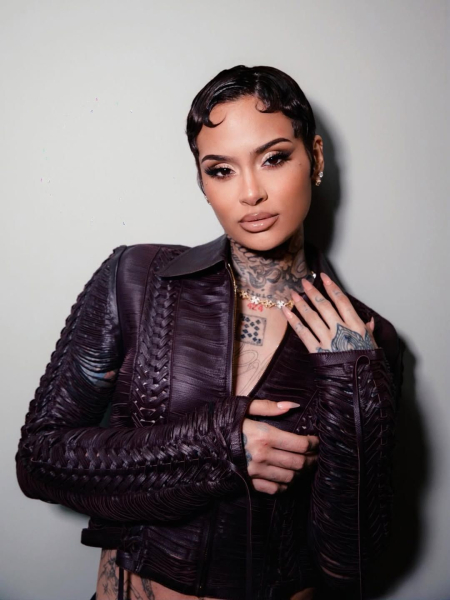
    Kehlani pixie hairJaime-Lee B.

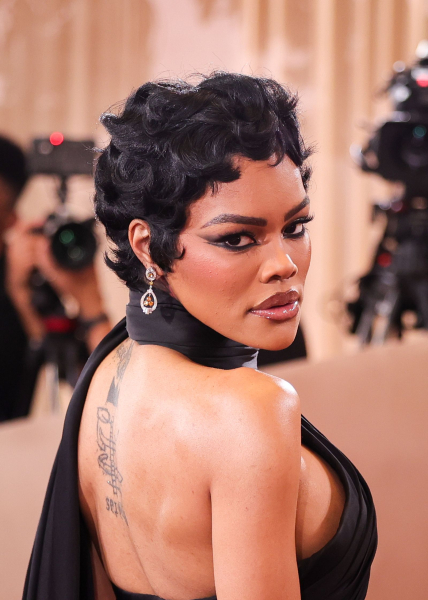
    Pixies had a moment last year, with stars like Keke Palmer, Teyana Taylor, and Zoë Kravitz getting in on the crop. (I even chopped my hair into a cute little coily pixie.) Stylists say the crop isn’t going anywhere, but it will likely get a glossy update. Taylor and Kehlani both have sleek, wavy pixies.

    Taylor’s pixie, in particular, is accentuated by shiny, fluffy waves. To get the look, form tiny waves with a mini flatiron, like the RevAir Micro Edge Styler (which is about 0.3 inches), and apply a lightweight oil for a slight sheen. Nikki Nelms used Shea Moisture Smooth & Shine Hair Oil on Taylor at the Golden Globes (a product I also use and love). The 4U by Tia Multi-Use Oil is another great lightweight oil that adds subtle shine and reduces frizz.

    Teyana Taylor pixie haircutGetty Images

    Kehlani has made appearances with her hair slicked down and sculpted to highlight her waves. The wet look is equal parts sensual and cute, and it’s easy to re-create at home. Just work a medium-hold gel, like Eco Style Gel, throughout your hair, followed by a copious amount of mousse (you can count on Mizani Styling Foam to be flake-free). Before everything dries down, use a narrow-tooth comb to define your waves. Finally, set your style with a durag or scarf.

    Ivy Braids

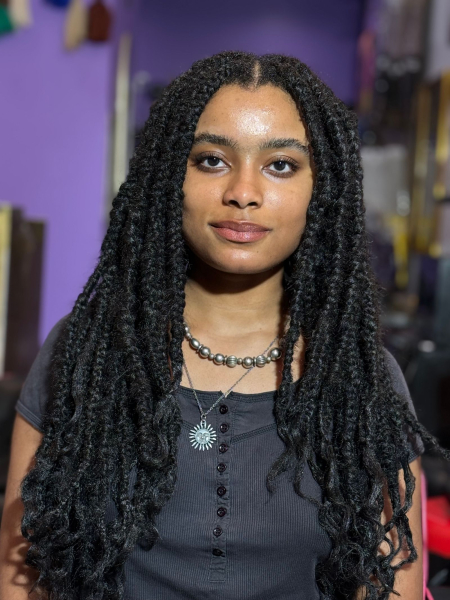
    Black woman wearing kinky braidsSusan OludeleZazie Beetz Ivy braidsGetty Images

    Boho braids reigned supreme for the past few years, but there’s a new box braid style in town: ivy braids. Oludele accidentally created the now-viral hair look while freestyling braids on actor Zazie Beetz in 2025. Keeping a lived-in look in mind, the braider began with traditional box braids: “I started experimenting with the braiding hair, in a sort of back-combing method,” Oludele explains, ultimately landing on a perfectly undone braid style that feels more down-to-earth than traditional knotless box braids.

    After the photo shoot, Oludele’s inbox blew up with people wanting to know more about ivy braids—and it’s still one of her most requested styles. People love that these braids are easy on the scalp: “It finally feels like a style we can do that doesn't require much tension," says Oludele.

    To create ivy braids, start with clean, natural hair. You can skip the gel because fuzzy roots are key to giving these braids their lived-in effect. “Braid really loose at the root,” says Oludele. “Imagine you’re three years old: How would a three-year-old braid? With a very loose hand.” Using regular Kanekalon braiding hair to create this style is ideal, but if you want an even more textured look, you can use Afro-kinky hair.

    Tanavoho Braids

    Jackie Aina Tanavoho braidsGetty Images

    You may not see this style often now, but it wasn’t always uncommon. This look was worn by single women in the Sakalava Tribe of Madagascar, which formed the country's first major kingdom in the 16th century. The style resembles a crown, with braids that end with a puff framing the head in a circular shape.

    Rihanna wore the look on her British Vogue cover in 2020, and the style gained minor global traction after that, but Oludele says, 2026 is the year that Tanavoho braids will become mainstream in the United States. “A lot of the old hairstyles from Africa are resurfacing again,” she says. “People want more cultural and artistic looks.”

    Tanavoho braids start as box braids (or locs) at the root, then get plaited down to about the length of a bob before ending with round puffs of kinky hair. “You can use regular braiding hair or Afro-kinky hair and create the balls by matting the hair with a teasing or back-combing method,” says Oludele.

    Some stylists use a hairnet to secure the puffs and create a more rounded shape, while others prefer to leave them a little undone.

    Fluffy Silk Press

    Chase Infiniti fluffy silk pressGetty Images

    The fluffy silk press had a trending moment in 2024, and it’s making a comeback as people strive to do less to their natural hair in 2026. This soft style has already had a major red carpet moment on Chase Infiniti at the Golden Globes. The actor’s long, airy hair flowed behind her like a cloud, while her face was neatly framed by a middle part with hair tucked behind her ears.

    Ariana Greene, a hairstylist in New York City, says her go-to technique to achieve a voluminous, fluffy blowout is using a blow-dryer brush. She recommends the Kitsch Large Thermal Round Brush. And the Kristin Ess Volumizing Blowout Brush, which has a paddle brush, easily glides through my detangled coils, giving me a soft blowout in a matter of minutes.

    This style doesn’t use as much heat as a traditional silk press (it doesn’t require a flatiron), but Greene still recommends using heat protection. She loves the Kenra Blow Dry Spray and the Paul Mitchell Super Skinny Serum. Both products reduce frizz when applied to damp hair before blow-drying. As your fluffy silk press begins to get old, you can plait your hair in four to six jumbo braids. Take the braids out after a day, and you’ll have an airy braid-out.

    Finger-coils

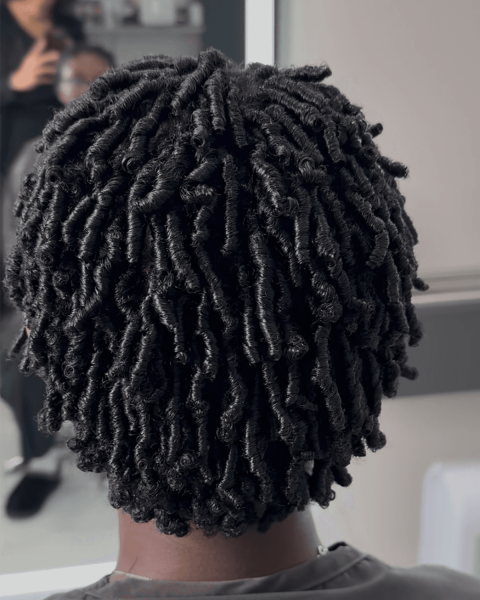
    Image of finger coils on 4C natural hairAnnie Blay-Tettey

    Yes, we're manipulating our hair less this year, but this notoriously time-consuming hairstyle has benefits you just can’t pass up. Iandra Regalado, a hairstylist in New York and Jersey City, says she’s been getting more requests than ever for this look.

    Regalado, who did my finger coils in December, says the style is especially popular among clients who are transitioning from permed or damaged hair to natural hair. “Many of them are dealing with heat damage and aren’t ready to cut all of their hair off yet,” she says. “Finger-coiling helps train the hair to do what it’s naturally supposed to do, even when there’s still some damage present. Over time, it can help encourage a more uniform curl pattern and make the strands appear more evenly curled.”

    When creating your finger coils, Regalado says, pay attention to the size of each coil. “Smaller sections create more defined, longer-lasting coils, while larger sections give you a bigger, softer curl,” explains Regalado, who created small, tight coils on my hair. Of course, creating smaller sections will take longer—it took about an hour to finger-coil my whole head.

    Products that offer both hydration and hold will give you the best results with this style. Regalado recommends first using a leave-in, like the Crown Affair Leave-In, that hydrates the hair, followed by a strong-hold gel (I love the Olaplex No. 10 Curl Defining Gel) to create defined coils.

    A key step in creating finger-twists is sitting under a hooded dryer after finishing the coils. “This helps lock in moisture and set the hold,” says Regalado, “which is especially important if you want the style to last longer and maintain its definition.”

    Sisterlocks

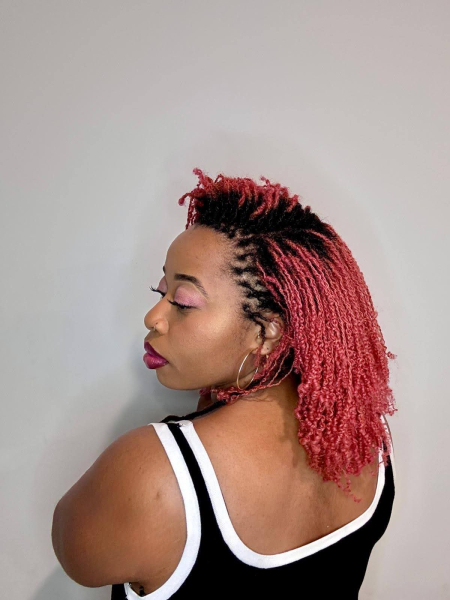
    Pink SisterlocksMaya Smith

    Sisterlocks are far from new, but Maya Smith, a hairstylist in South Carolina, says they’re definitely having a moment. The style involves interlocking natural hair from root to tip by creating teeny comb coils or tiny twists, known as starter locs. After your roots start to grow out, you’ll need to revisit the stylist, who will re-loc your roots to match the rest of your hair.

    As your hair grows and you continue to re-loc, it will eventually look like this coveted style. The process can be tedious, which is why getting this style is often referred to as “a journey.” Smith warns: “Locs require commitment and intentionality, especially in the beginning, while they’re still forming. If you’re someone who doesn’t want to be bothered with styling and caring for your natural hair, this isn’t the look for you.”

    Due to how tiny the locs are and how meticulous the process is, be sure to ask your stylist if they are specifically licensed to do sisterlocks. “You want to make sure whoever is doing your locs knows what they’re doing and understands natural hair in its entirety,” says Smith, “so they can determine the best sizing, technique, and products to use to achieve the best foundation and longevity of your locs.”

    Mini Twists

    Black girl wearing mini twists with a side partInstagram / @dippedinshanelle

    If you’re not ready to commit to a look like Sisterlocks, mini twists (simple, two-strand twists) are an equally trendy alternative. They have a similar vibe, but can be taken out after a few weeks.

    Plus, you can easily do mini twists on yourself at home, which I’ve done many times. You’ll need a parting comb, gel, and kinky extensions (if you want added length). Starting with clean hair, begin parting into small (pencil-width) sections and applying a dime-size amount of gel to each section before twisting. I love The Doux Big Poppa Curl Defining Gel, which gives my twists a long-lasting hold without causing too much shrinkage or leaving a crunchy cast.

    If you want looser, less springy twists, or just longer twists, try blow-drying your hair before twists to stretch out your natural curl pattern.

  • We’ve Reached Peak LED Mask

    We’ve Reached Peak LED Mask

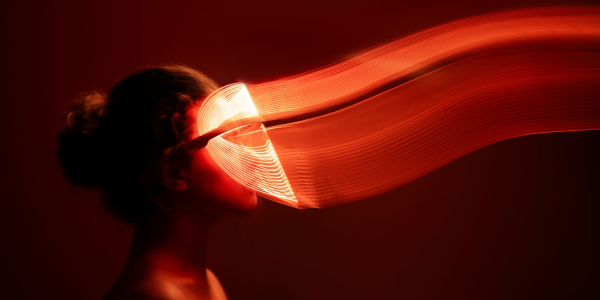
    Woman wearing red light therapy mask with streaks of red light leading away from her faceGetty ImagesSave StorySave this storySave StorySave this story

    In the Red Light Wars, publicists, too, are soldiers. Marie-Laure Fournier, the owner of an eponymous public relations firm which represents a variety of beauty clients, entered battle triumphantly. Her black glasses are a signature, as is her reliable ability to commit grand acts of PR—like placing her client Currentbody’s signature LED face mask in an episode of Netflix’s Emily in Paris—and her occasionally verbose press releases, like the one that arrived in editors’ inboxes in the early days of battle, August 2024, subject line: Unmasking Lyma & And Its LED Lies.

    LED stands for light emitting diode, the acronym for a semiconductor that emits light when an electrical current runs through it, and describes the technology that uses light of a certain wavelength to produce an anti-inflammatory reaction in the skin, with the goal of making it appear glowier instantly and glassier over time. These wavelengths, between 630 and 700 nanometers, appear red in the visible spectrum (whereas the wavelengths of the LED inside the overhead lighting at your office appear white), and have given rise to “red light therapy.” LED treatments are often administered in dermatologist offices and spas, but have been cleared by the FDA (cleared, not approved—more on that in a moment) to be manufactured in at-home devices like Currentbody’s. This has created a growing, glowing, billion-dollar segment of the beauty market and fierce competition among purveyors of this radiant technology. And consumers are lapping it up.

    Researchers at the University of Pennsylvania released a study a few months ago that, from November 2019 to November 2024, there was an average 118% increase in search volume for red light therapy-related terms as compared with that of other skin-care words and phrases (like “exfoliation” and “chemical peel”). As of February 2024, “red LED light therapy” had amassed more than 70 million views on TikTok, according to their analysis. The social media app has “significantly increased public interest in red-light therapy, surpassing that for traditional skin care treatments,” concludes the study. Also concluded: “This attention came despite limited scientific understanding of the long-term effects and safety, especially for home use.”

    ArrowArrow

    It was a press release for the Lyma Laser, a nearly $3,000 device by the company Lyma Life, that captured Fournier’s attention and immediate ire back in 2024. The document summarized a “world-first study” that had pitted Lyma’s proprietary laser technology against the much larger LED category, claiming the Lyma Laser device performed 100 times better than LED masks and was the most powerful beauty device on the market. “What does that even mean?” Fournier wrote in response. “Wouldn’t a 100x more powerful device blast your skin completely off your face?”

    Lyma says its device—which resembles a sleek flashlight—is a laser, not an LED device, the former implying deeper skin penetration and more effective results. Its laser emits a beam of a single wavelength that is “selectively absorbed into the skin,” according to its marketing, to promote skin healing and recovery. Both LEDs and lasers fall under the aims of something called photobiomodulation, which just means using light to help the skin heal itself. Lyma made the argument that their technology is a more refined version of current LED technology, and that its performance justifies its cost.

    Fournier’s email also included a link to the Lyma laser’s 510(k), the documentation filed on behalf of the brand for FDA clearance. The shade cast by sharing Lyma’s 510(k) came from the brand’s indication of two LED light therapy products—not lasers—as predicates, complicating its marketing.

    In January 2024, the UK’s Advertising Standards Advisory council reviewed the Lyma’s best-on-the-market and 100x-more-powerful claims and provided an exhaustive report that referenced the company’s efforts to substantiate its assertions with peer-reviewed studies, many of which were deemed irrelevant or not admissable to the council, who told the company to pull their Instagram ad and furthermore “to ensure they did not make claims about the efficacy or performance of the [laser] in the absence of adequate substantiation.” Lyma Life refuted the ASA’s ruling. They told Allure early last year that further research into the biological effectiveness of their near-infrared laser light “will be published in an independent scientific journal in the next few months.” When we followed up last month, the company shared a preliminary preclinical and clinical study published in the Aesthetic Surgery Journal Open Forum last year that “demonstrated [the LYMA Laser’s] superior ability to influence gene expression in healthy skin compared to an equivalent LED device.” In the study, 20 patients with chronic wounds used the newer LYMA Laser PRO for four weeks and their wounds healed more fully than those in the placebo group. A representative for the company added: “The UK ruling occurred prior to LYMA receiving FDA clearance. The LYMA Laser PRO underwent a rigorous process to gain this clearance, which we received in April 2025.” (The Pro version is marketed as three times as powerful, with a larger surface area, and goes for more than double the price—$5,995—of the original.)

    In its previous statement to Allure, Lyma upheld a distinction between their laser and LED products. “The term 'red light' is broadly used to explain the category but that is quite misleading,” a spokesperson said, noting that the red light seen on Lyma’s device does not mean that it is emitting 700-nanometer light but merely indicates it is switched on; the laser light itself is clear. The Lyma Laser works “completely differently,” and the brand hopes to educate the public on the difference.

    For my part, I have a difficult time grasping the distinction. So do other beauty customers. Fournier’s release served less to inform the beauty press than to defend her client by striking back at a competitor attempting to undermine its integrity; a typical skirmish in the Red Light Wars. With little regulation on these devices, consumer confusion abounds about how they actually work (not to mention which ones are even using red light at all), and how much is too much to spend on them.

    “Honestly, I think it all comes down to marketing,” says a senior level executive at one LED brand who asked to remain anonymous. After we spoke, she had a meeting scheduled with a spa owner, who she was hoping might ditch their LED tech for hers.

    Under these circumstances, where even those who employ the technology are unsure about “the best,” consumers are left to fend for themselves. They’re shopping anyway. According to affiliate marketing firm ShopMy, in December 2025, the highest-grossing beauty product on its platform was Currentbody’s LED mask. Omnilux’s LED mask came in third, and the Lyma Laser was eighth.

    ArrowArrow

    The Red Light Wars began, in earnest, around 2020. In the grand scheme of things, beauty had been booming, but at-home devices were slow to catch on. In 2017, Neutrogena tried and failed to sustain a drugstore LED mask—which utilized a combination of blue and red light—after it was deemed to possibly cause eye injury among photosensitive people or those with existing eye conditions. But earlier entrants, like Omnilux, have been planning their moment for decades.

    Omnilux’s first at-home LED devices, the New-U and Clear-U, were FDA cleared in 2008 and 2009, respectively. In 2020, Omnilux released what has become the brand’s hero product for consumers: a floppy, portable mask called the Omnilux Contour, which retails for $395. Ads for the mask have run on TikTok, YouTube and Facebook, and between episodes of The Real Housewives on NBC’s Peacock app. The Omnilux mask reflects the very latest in LED technology: a flat but flexible fit, studded with diodes trained to emit light at a cosmetically beneficial wavelength.

    Most at-home beauty devices require the FDA’s blessing to be sold. They do not however require FDA approval, which involves sheaths of paperwork and batteries of lab tests to prove that a drug or device or vaccine comes with minimal risk and measurable benefit. Instead, products can receive FDA’s 510(k) clearance if “they are deemed safe and substantially equivalent to existing devices,” a spokesperson for the agency told Allure.

    That existing cleared device, though, could have been cleared decades ago. (The 510(k) clearance process for medical devices has been the same for 50 years, despite calls for more regulation from organizations including the National Academy of Medicine.) And it—nor the new device seeking clearance on its back—did not necessarily have to show clinical studies proving its effectiveness (the requirements vary from device to device, per the FDA spokesperson). Basically, “FDA-cleared” in no way means that the exact LED mask you’re considering has clinical research behind its claims.

    LED products have gained much steam on social media, where they lend themselves to arresting selfie photography. On TikTok, #redlight and its related hashtags (#redlighttherapy, #LEDmask) continue to rack up a few hundred thousand posts a month; they fly off the virtual shelves on marketplaces like Amazon, where LED mask purveyors Dr. Dennis Gross and SolaWave have opened storefronts. Among the site’s best-sellers, though, are low-cost alternatives that will run you no more than $65, which can pose real dangers. Shereene Idriss, MD, a board-certified dermatologist in New York City, recalled with horror when a patient suffered face burns from using an LED mask from Amazon; the diodes were, in fact, small incandescent bulbs, like Christmas lights. Aside from a lower-than-normal price tag, a telltale sign of a fake LED mask is if it gets hot.

    But generally speaking, in most cases, there’s little harm you can do to your skin with an at-home LED device, says Mona Gohara, MD, a board-certified dermatologist and clinical professor at the Yale School of Medicine Department of Dermatology. She does suggest, though, that patients who have skin conditions that can be triggered by light or heat, like melasma, steer clear of them (bearing in mind that melanated skin is more prone to hyperpigmentation in general). For acne patients, she recommends LED masks that utilize blue light around 415 nanometers, particularly when they can’t use topical medications like spironolactone due to allergies or sensitives. Or maybe they’re pregnant or nursing. “There are a lot of nuanced situations where a blue light mask may be helpful for acne,” says Dr. Gohara.

    She’s not as quick to recommend red light, which “is more about firming, minimizing fine lines, and achieving a ‘glow,’” she says. “There are a lot of other, better-studied ways to do that.” (For those curious: retinol and SPF, she says.) Some dermatologists seldom recommend LED of any color at all. “It's always been one of those murky areas within laser and light technologies,” says Tina Alster, a board-certified dermatologist in Washington DC. “It's just we don't know exactly how they work.” Neither Dr. Gohara nor Dr. Alster use an at-home LED device on their own skin, though Dr. Alster does provide LED treatments in her office to help reduce redness and swelling after laser treatments like Fraxel. Pressed for an at-home recommendation, Dr. Alster says the more diodes the better, which is why she prefers full-face masks to wands.

    ArrowArrow

    Most experts say that the benefits of LED can be observed over time, but only with strict adherence to its protocol. A systematic review of 31 randomly controlled trials of LED therapy for dermatologic ends, published in the journal Lasers in Surgery and Medicine, determined that blue light is most effective on inflammatory conditions like acne or herpes when used once or twice daily. The evidence of the cosmetic benefits of red light, like plumper, brighter skin, is more anecdotal. My friend Bela, a publicist, attributes her flawless skin to her daily Omnilux habit (she’s partial to the Contour model); she’s been on it for years. So has Adam, a grooming writer who swears by Dr. Dennis Gross’ white-and-rose-gold mask ($455). Both say that consistency is the key to unlocking LED’s benefits.

    Dr. Alster agrees‚ and adds that she rarely encounters patients with the discipline to consistently use an LED mask regularly, even if it is easy. (And even if new category entrants like Therabody are souping up their masks with added benefits like scalp massage to create more incentive.) “All I can do is wash my face twice a day and slap on my vitamin C,” Dr. Alster says. “And I’m a dermatologist.” For this reason and others, these devices were slow to penetrate until March 2020, when stay-at-home orders slowed the pace of busy lives.

    Convincing consumers to use a LED device should be simple, given how straightforward it is in theory. In practice, education is a slow and challenging process. “It looks too good to be true,” says Lotti Tyson, the brand director at Déesse Pro, which sells a $1,900 mask created in collaboration with aesthetician Shani Darden. “You're like, ‘well, hang on, this thing has very few contraindications, it doesn't cause any sensitivity.’ That does sound too good to be true.”

    While red light is still, in comparison with other wavelengths, the most researched for its effects on skin, others—like near-infrared at approximately 800 nanometers, or yellow light near 590—have been incorporated into new masks and do have some official, if scarce, literature to back them up. (A new LED mask by the brand Sunlighten also incorporates green light to serve as a “full-face wrinkle treatment and mood booster,” according to an email sent to editors. None of the dermatologists we spoke to for this story have seen clinical evidence of green light being effective for mood-boosting or wrinkle-treating, but early studies show it can help reduce headaches.) A few independent studies have shown that near-infrared light—as opposed to far-infared light, which can be used in medical settings to treat inflammatory and cardiovascular conditions—penetrates the skin more deeply than other wavelengths to help with wound healing. At the Consumer Electronics Show in Las Vegas earlier this month, L’Oréal Paris announced that it will launch a mask that incorporates both near-infrared and red light sometime in 2027. Yellow light, like red, has shown some promise in small studies for treating redness and rosacea, as well as soothing inflammation following in-office treatments like lasers.

    Déesse says that when they looked into incorporating blue light into their devices, their own research found that it killed acne-causing bacteria at around 415 nanometers, but at 420 it killed skin cells instead. “At 420, you may cause hyperpigmentation in certain skin types, but you're certainly not killing any bacteria,” Tyson says, adding that “the crappy [masks] on TikTok” can clock in at around 450-plus nanometers. Systematic studies of blue light show that bacteria is killed between 405 and 420 nanometers; while a 2021 study out of the University of Lodz observed hyperpigmentation in skin with blue light between 423 and 450 nanometers, though much of it wasn’t permanent, researchers said. If you actually want to verify an LED device’s wavelength claims you would have to purchase a spectroradiometer, which could run you upwards of $2,200 if it covers a wide enough wavelength to be effective (and would be an impressive level of consumer due diligence).

    As the FDA is unlikely to create specific guidelines around LED devices any time soon, the burden falls on companies themselves to prove their worth. Some will rely on expensive clinical trials, while others will invest in equally expensive PR campaigns, leaving us—as always!—to figure out the truth for ourselves. “I’ve reached out to several different companies asking them if they're interested in doing any clinical trials or research,” says Jared Jagdeo, MD, associate professor of dermatology and director of the Center for Photomedicine at SUNY Downstate Health Sciences University. “And because of the ease of selling these devices without the need for clinical trials, [companies] oftentimes forgo investing in that and focus their energies on marketing [instead].” That said, the most valuable things to look for are, in order of importance: Third-party clinical trials of that exact device involving at least five subjects (though the more the better, says Dr. Jagdeo) that are published on a brand’s website (and ideally in a peer-reviewed journal); independent academic research on the specific wavelength employed in the device (which should be clearly listed in the product description); and firsthand reviews from people you know in real life (online customer reviews are, unfortunately, not always to be trusted). Omnilux, which has a scientific advisory board that includes Dr. Jagdeo, has been publishing its LED research in peer-reviewed journals since the company’s inception. Some brands, like Déesse, share before-and-after imagery of people who’ve used their devices consistently over weeks or months. Always look for consistent lighting and positioning in these transformation photos, because the wow factor can be misleading.

    So let’s review: red light, yellow light, green light, blue light, LED, nanometers, near-infrared, far-infrared, 510 (k). You’ve got all that? Neither do we. It seems there is no clear-cut victor in the Red Light Wars. (Kind of like Star Wars in the early aughts: mired in confusion and plot chaos.). Do they work? Maaaaybe. (Just don’t slack off.) Are they safe? Probably, but depends. Are they worth the money? See questions one and two. We’ve tried our best to shine a light on the category. With all things in the beauty galaxy, there’s always a new hope, but of course a phantom menace lurks around every corner.

    Source Images: Getty Images

  • Is the Backlash to Facial Conformity Finally Upon Us?

    Is the Backlash to Facial Conformity Finally Upon Us?

    Image may contain Claire Danes Head Person Face Sad Crying and AdultCollage: Allure; Source images: Mobland: Paramount+; The Beast in Me/ The Diplomat: Netflix; Hamnet: Focus FeaturesSave StorySave this storySave StorySave this story

    I had the extraordinary experience of watching the movie Hamnet the other day. Extraordinary not only because of the gorgeous and evocative cinematography, the deeply moving emotional integrity, and the raw, fierce character studies, but because of the incomparable expressions of feeling—from suspicion to anticipation, joy, unfathomable grief, and finally ravenous awe—on the face of the 36-year-old actor Jessie Buckley. Her performance was duly recognized Sunday night with a Golden Globe for best actress in a movie drama.

    What a face. What an absolutely unremarkable face: a little lopsided, youthful, barely lined. But as an instrument? Buckley’s face is a symphony, guiding us through the movie’s plot with violent chords of rage and sorrow, graced with harmonious notes of tender affection. How does she do it?

    All I can tell you is: Her face says it all.

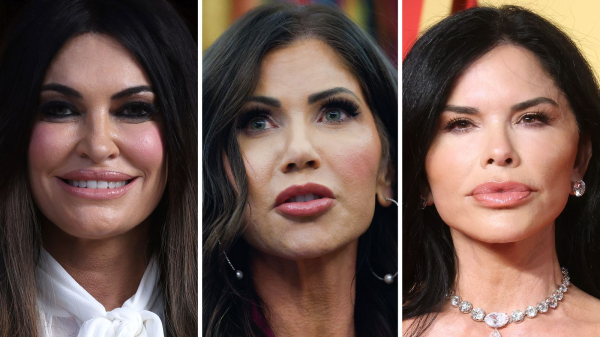
    Which got me to thinking, what is a face for? And what might be the consequences of the current trend toward a kind of facial conformity resulting from a desire to imitate a narrow beauty standard prominent on social media? Mar-a-Lago face already makes it almost impossible to decipher who’s who in that particular troop. Dehumanization often begins by hiding or erasing images of people’s faces…or possibly by making them indistinguishable from one another.

    Image may contain Kristi Noem Head Person Face Adult Photography Portrait Cosmetics and Lipstick

    Aesthetic interventions that change contours and erase wrinkles can diminish the cues that signal warmth and wisdom, the very things we rely on a face to communicate. From left: US ambassador to Greece Kimberly Guilfoyle, US secretary of Homeland Security Kristi Noem, Lauren Sánchez Bezos.

    Getty images

    I wonder if we’ve been in the process of losing the face’s primary function. And whether we’re finally starting to see a real backlash to the prevalence of conformity. There is certainly a roster of celebrities refusing to succumb to extreme facial work—and I might argue this is a result of more of us recognizing the threat to our social harmony and community. As one astute editor at this magazine asks, “going into 2026, maybe it’s not an anomaly to see a woman over 40—or 70—looking her age onscreen?” Stars like Keri Russell, Claire Danes, and Olivia Colman on the younger end; Parker Posey, Robin Wright, and Jodie Foster in the mid-range; more mature luminaries Kathy Bates, Helen Mirren, Catherine O’Hara, and Jean Smart—none of them have taken the Kris Jenner route. That feels like more than just a handful of resistance.

    Mar-a-Lago face makes it almost impossible to decipher who’s who in that particular troop.

    To get back to the basic question: What’s a face for? Starting with the completely obvious, a face is what enables your friend to pick you out of a crowd (recognition). If you’re a toddler lost in a department store, it allows you to realize with desperate surprise that the adult hand you just grabbed does not belong to the face you trust (bonding resulting from facial attunement). In which case, your face will communicate unequivocally to that strange adult that you are not comfortable with their unfamiliar companionship (communication of emotions). All of which suggests that the human face has evolved to be read. Our physiognomy, including individual asymmetries, our expressions (macro and micro), the qualities of our complexion, all encode valuable information about age, our mental and physical health, our lived experience and personality. What happens when these cues are greatly diminished or erased either by plastic surgery or other aesthetic interventions?

    What happens is—among other things I’ll get to in a minute—confusion. Because facial expressions create a feedback loop between people. When expressions are reduced or largely eradicated, communication is distorted. (Watch this video of Botoxed women trying to look angry.) But expressions also initiate emotional feedback with yourself. Smiling can actually lift your mood, while frowning can lower it. This, I now realize, might be why in my 70s I’m suddenly considering my first surgical intervention to modify the unwelcome changes I’ve noticed around my mouth—intensifying my resting bitch face, and so sending distorted feedback about my persistently sunny outlook.

    I wonder if we’ve been in the process of losing the face’s primary function.

    In fact, the face is so important to our social fabric that there’s an area of the brain—called the fusiform face area—devoted exclusively to decoding it. Damage the cerebral geography here, and you can’t even read the map, losing altogether the ability to recognize faces (prosopagnosia). But here’s what might be the most revealing detail about how your brain reads a face. It’s not by examining it at rest. The brain interprets patterns of movement: tension at the corners of the mouth, a slight widening of the eyes, a lift of the eyebrow. When facial movement looks unusual or inconsistent to what we expect—no matter how “perfect” the face—it makes us feel uncomfortable because the signals we’re getting are degraded and unreadable. Which is when we might begin to feel we’re looking at a person whose primary residence is deep in the Uncanny Valley.

    As the options for facial fiddling have become more accessible, the face is increasingly regarded as an image to be perfected. But aesthetic treatments that sharpen the contours of the face—snatching the jaw, inflating the lips—to give them more contrast in photos, can reduce and distort expression. Aesthetic interventions that reduce wrinkles and facial asymmetries like crows’-feet diminish the cues that can signal warmth, wisdom, and happiness, the very things we rely on a face to communicate. There’s even a procedure now designed to diminish or resolve that adorable little pocket some people get just beneath their eyes when they smile. Neurotoxin is injected to relax the muscles under the eyes, reducing the bulging “jelly roll.” I have just one question about this procedure: Why?

    When facial movement looks unusual or inconsistent—no matter how “perfect” the face—it makes us feel uncomfortable because the signals we’re getting are degraded and unreadable.

    If there’s a trend toward aesthetic procedures that yield more natural-looking results—a prediction that seems to be floating to the top of the 2026 prediction pile—that might make it easier to go even farther than that: rejecting the idea that any aesthetic intervention is inevitable as we age.

    After all, similar to how Jessie Buckley uses her face as an artistic instrument, we use ours (often unconsciously) as a social instrument. A face identifies us as a person alive and with presence; a face is irreducibly unique, and yet through it we can trace the bones and beauty of our ancestors. As we age, a face can serve as a lovely, richly imbued representation of past harmonies and discordance—essentially, in the end, a coda to a well-lived life.

  • Hailey Bieber’s Midnight Blue Nails Are a Total Winter Mood—See the Photos

    Hailey Bieber’s Midnight Blue Nails Are a Total Winter Mood—See the Photos

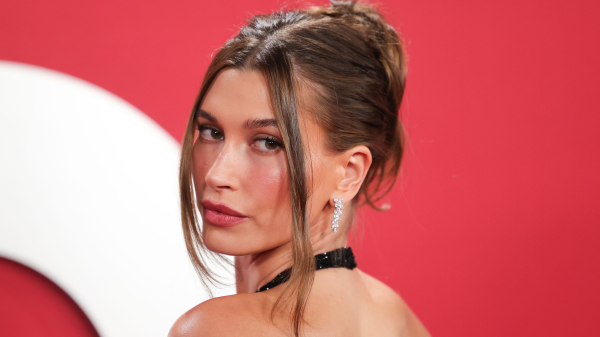
    Hailey Bieber poses in a halter dress and updo.Getty ImagesSave StorySave this storySave StorySave this story

    Hailey Bieber must've sensed that I have a nail appointment on the books and no idea which color to choose because she just served up the perfect shade of dark, smoky, moody blue—exactly what I'm craving this month. Thanks, Hailey!

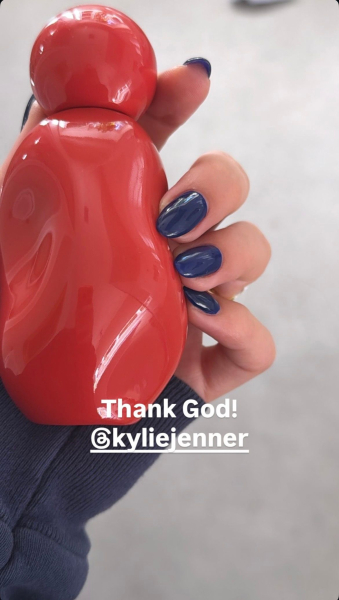
    Bieber is pretty loyal to her signature subtle glazed nails and variations thereof, but she also loves a well-timed nail surprise. That's exactly what she delivered in an Instagram Story on January 15, which doubled as a shoutout to her pal Kylie Jenner's new Cosmic Intense perfume. In the snapshot, Bieber holds the (truly gorgeous) sculpted red bottle in her hands, and the contrast between her midnight blue nails and the orange-red perfume bottle is really striking, making her nails pop even more.

    Just a few days after attending an awards ceremony in a silver couture gown with silver cat-eye nails to match, Bieber changed up her mani aesthetic and chose a creamy, satiny, deep blue, somewhere between sapphire and navy with a slightly dusky tone like the night sky. Her nails were slightly shorter than usual, filed into her preferred soft almond shape, and the dark blue just so happened to perfectly match her top, which you can see peeking from the edge of the pic. Was that intentional, just a coincidence, or maybe even the inspiration for the color?

    Hailey Bieber holds a perfume bottle with navy blue nails.Screenshotinstagram.com/haileybieber

    Bieber's midnight blue nails are, of course, right on trend. This winter, we've been feeling saturated nail polish shades like her chosen hue, including emerald green, dark or shimmering violet, and decadent chocolate brown—colors that feel mesmerizing in their depth and intensity, with a richness that really sings in the winter months. And now, thanks to Mrs. Bieber, I know exactly which color I'm going to choose at my next nail appointment.

  • Bouncy Skin Starts With These Collagen Creams

    Bouncy Skin Starts With These Collagen Creams

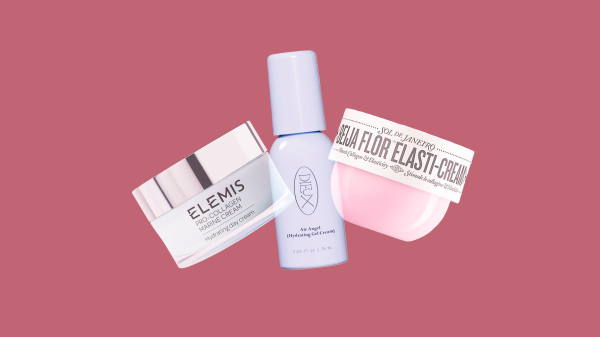
    Collagen creams on a pink backgroundCollage: Paula Balondo; Source images: Courtesy of brandsSave StorySave this storySave StorySave this story

    You may not be able to drink or chew your way to firmer, bouncier skin with collagen supplements, but the best collagen creams might take your skin in the right direction. Our skin's natural production of collagen, the structural protein that gives skin its firmness and elasticity, starts slowing down in our mid-twenties, leading to sagging, wrinkles, and fine lines. Wellness and beauty brands have started offering quick fixes via ingestible and topical collagen that claim to boost collagen production for bouncier, glowier skin. But the truth is, collagen loss cannot be replaced by a collagen-infused smoothie or face cream.

    That’s not to say collagen creams don’t come with benefits—in fact, they can have a rejuvenating effect on your complexion that hydrolyzed collagen supplements promise if they are formulated with proven collagen-stimulating ingredients, says board-certified dermatologist Nina Desai, MD. While some creams use animal-derived collagen (typically from bovine, porcine, or marine sources), others now feature lab-engineered or vegan alternatives that mimic collagen’s amino acid profile as well as other ingredients such as PDRN—short for polydeoxyribonucleotide, a compound derived from salmon sperm DNA that’s been studied for its regenerative and healing properties—or peptides, which boost firmness and elasticity.

    Our Top Collagen Creams

    • Best Overall: Sungboon Editor Deep Collagen Retinol Power Boosting Capsule Cream, $32
    • Best Lightweight: Anua PDRN Hyaluronic Acid 100 Moisturizing Cream, $23
    • Best for Barrier Repair: Medicube PDRN Pink Collagen Capsule Cream, $22
    • Best for Dry Skin: Elemis Pro-Collagen Marine Cream, $140
    • Best for Minimizing Pores: Biodance Pore Perfecting Collagen Peptide Cream, $29
    • Best Overnight Mask: Abib PDRN Collagen Overnight Mask, $24
    • Best for Sensitive Skin: Dieux Air Angel Daily Moisturizer, $44
    • Best with SPF: Neutrogena Collagen Bank SPF Moisturizer, $23
    • Best Eye Cream: Kiehl's Super Multi-Corrective Anti-Aging Eye Cream, $60
    • Best Body Cream: Sol de Janeiro Beija Flor Elasti-Cream, $48
    • Best for Redness: First Aid Beauty Firming Cream, $44
    • Best for Deep-Set Wrinkles: Parëva Beauty Coll20 Gel Cream Moisturizer, $109

    Ahead, Allure editors and board-certified dermatologists share the best collagen creams that help firm, tighten, plump, and rejuvenate skin over time.

    Frequently Asked QuestionsAccordionItemContainerButtonLargeChevron

    • Does collagen cream actually work?
    • What ingredients pair well with collagen?
    • Meet the experts
    • How we test and review products
    • Our staff and testers

    Best Overall: Sungboon Editor Deep Collagen Retinol Power Boosting Capsule Cream
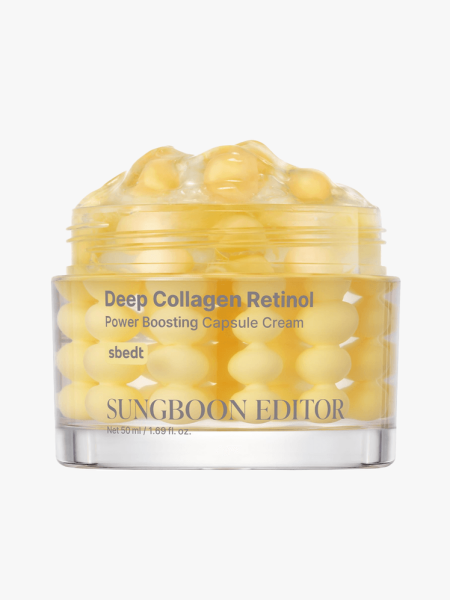
    Sungboon Editor Deep Collagen Retinol Power Boosting Capsule Cream in branded component on a light greay backgroundSave to wishlistSave to wishlist

    Sungboon Editor

    Deep Collagen Retinol Power Boosting Capsule Cream

    $28

    Amazon

    $32

    Ulta Beauty

    Allure commerce editor Sarah Han applying the Sungboon Editor Deep Collagen Retinol Power Boosting Capsule Cream

    Sarah Han

    Why it's worth it: One look at the bouncy gel texture studded with bright yellow capsules, and you can already tell this isn’t your average face cream. Inside this K-beauty fan favorite, hydrolyzed collagen—broken down into ultra-small molecules your skin can actually absorb—delivers a rush of hydration to help skin look plumper, firmer, and smoother. You’ll feel a light, tingly sensation from pore-sized spicules (tiny, needle-like structures derived from marine sponges) that create a gentle needling effect to help actives absorb better and kick-start cell turnover. Add retinol, and you’ve got a powerful formula that smooths fine lines while keeping your skin supple.

    Bonus: You can tweak the retinol to your needs. For dry skin, double up on the capsules with less gel (2:1). Keep things even for normal skin (1:1). Or, if you’re oily or sensitive, add more gel to lighten the mix (1:2).

    Tester feedback from commerce editor Sarah Han

    AccordionItemContainerButtonLargeChevron

    “Leave it to Sungboon Editor to make retinol…fun? The experience of scooping out the sunshine-yellow capsules from the Deep Collagen Retinol Power Boosting Capsule Cream is a delight, and the gel is really refreshing—perfect for calming down my skin after a long day. I like layering my more hydrating essences and serums—peptides, growth factors, you name it—before slathering on a 1:1 ratio of this capsule cream to balance out my combo skin. I know the jury is still out on spicules, but I find that this cream is gentler and less alarming than the more intense spicule serums I've tried—just my two cents!” —Sarah Han, commerce editor

    More to know

    AccordionItemContainerButtonLargeChevron

    • Key ingredients: 7 types of collagen (including collagen extract, collagen amino acids, and soluble collagen), retinol, hyaluronic acid, panthenol
    • Fragrance-free: yes

    Best Lightweight: Anua PDRN Hyaluronic Acid 100 Moisturizing Cream
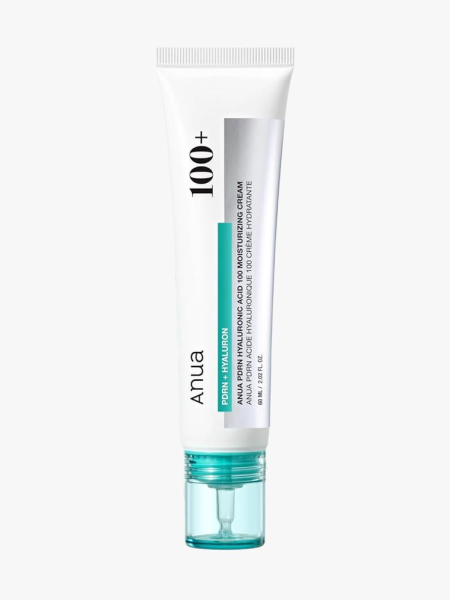
    Anua PDRN Hyaluronic Acid 100 Moisturizing Cream in branded tube component on a light gray backgroundSave to wishlistSave to wishlist

    Anua

    PDRN Hyaluronic Acid 100 Moisturizing Cream

    $24

    Amazon

    $24

    Ulta Beauty

    Allure senior commerce editor Sarah Felbin applying the Anua PDRN Hyaluronic Acid 100 Moisturizing Cream

    Why it’s worth it: We haven’t met anyone who doesn’t want glass-like skin, and Anua’s PDRN Hyaluronic Acid 100 Moisturizing Cream (the “100” refers to Anua’s claim of 100 hours of dermal hydration) delivers every time. The moment it hits your skin, it leaves behind that ultra-clean, glazed glow we’re always chasing, while infusing a powerhouse blend of PDRN, hyaluronic acid, and hydrolyzed collagen (meaning it’s been broken down into smaller molecules that penetrate the skin more easily) to improve texture and radiance over time. On top of that, glycerin pulls moisture in, squalane locks it in, and aloe soothes and calms. It makes total sense why we can never put this dream cream down.

    Tester feedback from senior commerce editor Sarah Felbin

    AccordionItemContainerButtonLargeChevron

    “My perfect moisturizer is lightweight, non-greasy, and deeply hydrating. This one from Anua checks every box. As the thin cream sinks in, it gets to work, moisturizing my sensitive skin (dry, flaky patches and all) while giving me a great glow. I also love that it comes in an easy to squeeze tube, so I don't have to stick my fingers into a jar of cream.”—Sarah Felbin, senior commerce editor

    More to know

    AccordionItemContainerButtonLargeChevron

    • Key ingredients: PDRN, hydrolyzed collagen, hyaluronic acid, glycerin, squalane, aloe
    • Fragrance-free: yes

    Best for Barrier Repair: Medicube PDRN Pink Collagen Capsule Cream
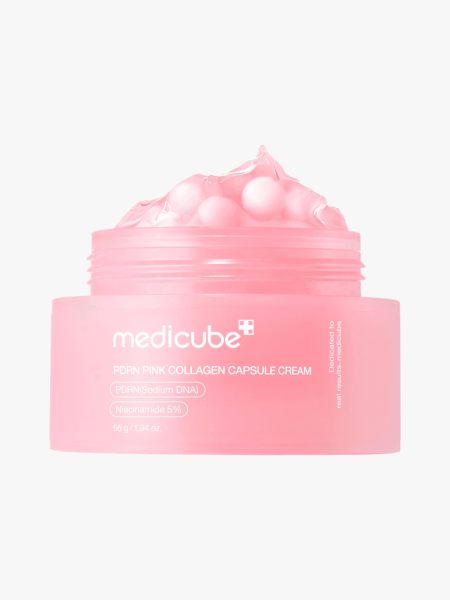
    Medicube PDRN Pink Collagen Capsule Cream in branded tub component on a light gray backgroundSave to wishlistSave to wishlist

    Medicube

    PDRN Pink Collagen Capsule Cream

    $22 $17 (23% off)

    Amazon

    $22

    Ulta Beauty

    Allure social media manager Bianca Richards applying the Medicube PDRN Pink Collagen Capsule Cream

    Bianca Richards

    Why it's worth it: Another K-beauty capsule cream worth picking up, Medicube’s PDRN Pink Collagen Capsule Cream is a double act of collagen and PDRN to help stimulate skin repair, boost elasticity, and improve hydration. Scoop out the little pink capsules (fun, right?) and watch them melt right in, flooding skin with moisture and a healthy, springy bounce. In addition to PDRN and collagen, the soothing formula also blends hyaluronic acid and niacinamide into the gel base for even more lightweight hydration.

    Tester feedback from social media manager Bianca Richards

    AccordionItemContainerButtonLargeChevron

    “For my 30th birthday, I decided to treat myself to a salmon DNA facial, and it's easily one of my favorite treatments ever! To prolong the effects of the treatment, I stocked up on the Medicube PDRN collection, and the peptide cream is the perfect choice for everyday use to keep my skin looking plump and smooth!” —Bianca Richards, social media manager

    More to know

    AccordionItemContainerButtonLargeChevron

    • Key ingredients: salmon DNA (PDRN), hyaluronic acid, hydrolyzed collagen extract, niacinamide
    • Fragrance-free: yes

    Best for Dry Skin: Elemis Pro-Collagen Marine Cream
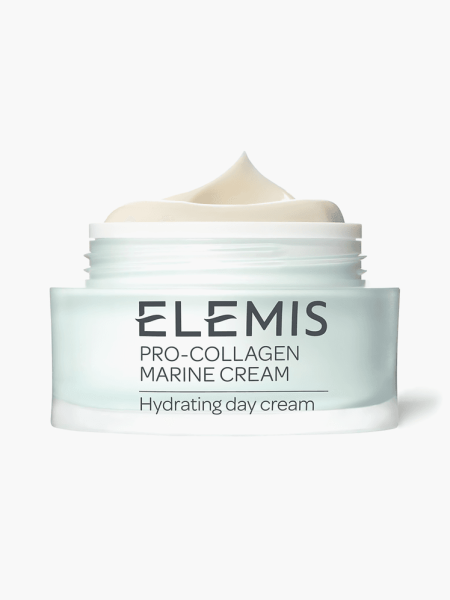
    Pro-Collagen Marine Cream in branded soft mint jar on light gray backgroundSave to wishlistSave to wishlist

    Elemis

    Pro-Collagen Marine Cream

    $145 $109 (25% off)

    Amazon

    $145

    Nordstrom

    $145

    Ulta Beauty

    Allure senior commerce editor Sarah Felbin applying Elemis Pro-Collagen Marine Cream

    Sarah Felbin

    Why it's worth it: With so many collagen creams flooding the market, the Elemis Pro-Collagen Marine Cream truly makes waves (pun intended) with its hero ingredient, padina pavonica, a Mediterranean algae that helps restore bounce and hydration. Known for its silky, gel-cream texture, it hugs the skin in hydration—never feeling heavy or greasy—to deliver lasting hydration and a firmer, smoother feel. Thanks to its balance of effectiveness and wearability, “it’s an easy addition to any skin-care routine to address hydration, fine lines, and skin firmness,” says Peterson Pierre, MD, a board-certified dermatologist based in Thousand Oaks, California. The scent is another highlight for some: Notes of rose and mimosa feel like you’re at the spa.

    Tester feedback from Felbin

    AccordionItemContainerButtonLargeChevron

    “This is one of the thickest, most hydrating creams I've tried. The super-soft texture is so satisfying, and it leaves my skin looking dewy and bouncy after every use. Elemis has become my favorite step in my skin-care routine—it seals all of my products in and gives me some serious glow. It does take a little longer to fully sink in than other moisturizers I've used, but the results are well worth the extra wait time. If you have super dry skin, I just know you'll love this!” —Sarah Felbin, senior commerce editor

    Tester feedback from executive beauty director Jenny Bailly

    AccordionItemContainerButtonLargeChevron

    "It has a gel-cream texture and just a trace of a soft floral scent (rose and mimosa). I've slathered a thick layer over a treatment product before bed and awoken to silky (but not sticky) skin. And I've applied a thin layer under my sunscreen and makeup in the morning without seeing a single pesky pill." —Jenny Bailly, executive beauty director

    More to know

    AccordionItemContainerButtonLargeChevron

    • Key ingredients: algae extracts, collagen amino acids, carrot root extract
    • Fragrance-free: no

    Best for Minimizing Pores: Biodance Pore Perfecting Collagen Peptide Cream
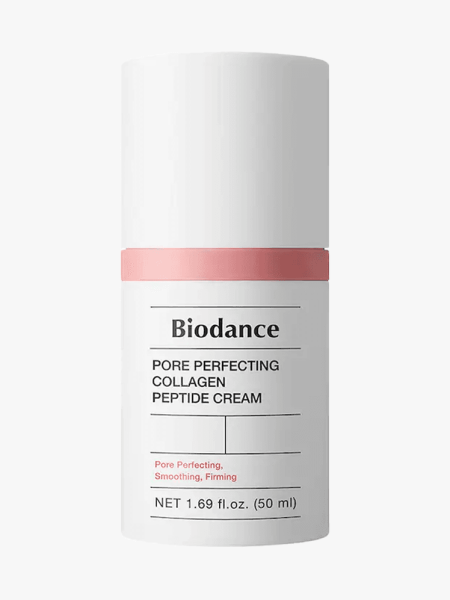
    Biodance Collagen Pore Perfecting Collagen Peptide Cream in branded component on a light gray backgroundSave to wishlistSave to wishlist

    Biodance

    Collagen Pore Perfecting Collagen Peptide Cream

    $29

    Amazon

    $29

    Sephora

    Allure contributing commerce writer Christa Joanna Lee applying the Biodance Collagen Cream

    Christa Joanna Lee

    Why it's worth it: If you’ve already fallen for Biodance’s viral sheet masks, you’re going to love what its Pore Perfecting Collagen Peptide Cream can do. This lightweight yet mighty formula utilizes ultra-low molecular weight collagen (small enough for your skin to absorb extra quickly), along with peptides to plump, firm, and smooth your skin. It’s not just surface hydration, but real bounce and juiciness from within. Hyaluronic acid keeps things dewy, antioxidants protect your glow, and pores look tighter and more refined with every use. It does all that without the luxury price tag, proving glass-like skin doesn’t have to cost a fortune.

    Tester feedback from contributing commerce writer Christa Joanna Lee

    AccordionItemContainerButtonLargeChevron

    “I’m already such a fan of the Collagen Real Deep Mask, so I was excited to try this collagen-infused cream—and it didn’t disappoint. The lightweight texture absorbs instantly, but I like to really slather it on and let it sit like a mini mask for a few minutes before gently rubbing any excess into my neck and décolletage. It leaves my skin feeling bouncy and refreshed all day.” —Christa Joanna Lee, contributing commerce writer

    More to know

    AccordionItemContainerButtonLargeChevron

    • Key ingredients: collagen water, collagen extract, mineragen complex, elastin, hyaluronic acid, fibroblast blend
    • Fragrance-free: yes

    Best Overnight Mask: Abib PDRN Collagen Overnight Mask
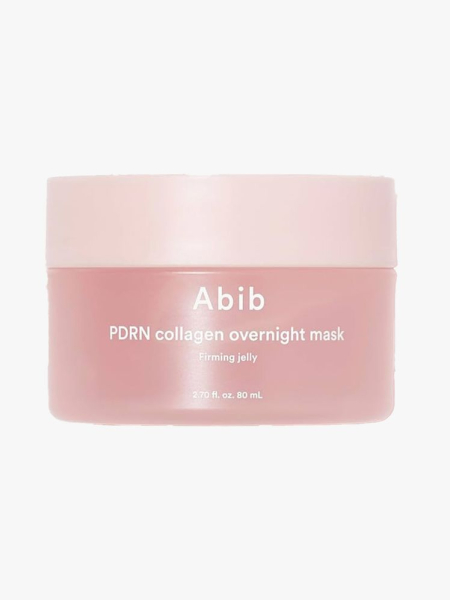
    Abib PDRN Collagen Overnight Mask pink jar on light gray backgroundSave to wishlistSave to wishlist

    Abib

    PDRN Collagen Overnight Mask

    $24 $23 (4% off)

    Amazon

    $33

    Olive Young

    Allure commerce editor Sarah Han applying the Abib PDRN Collagen Overnight Mask

    Sarah Han

    Why it’s worth it: Noticing a PDRN trend? There’s a reason—it really does live up to the hype for strengthening the skin. Unlike other moisturizer-forward formulas on this list, this one is designed for overnight use. Apply it like you would a moisturizer before your head hits the pillow, and wake up to smoother, plumper skin thanks to a low-molecular collagen extract called 300Da (Da is the unit for Daltons, which measures the weight of the molecule), panthenol to strengthen texture, and niacinamide to brighten and refine. Its jelly-like texture hugs the skin, locking in moisture all night for a glow that Allure editors agree is nothing short of shocking (in a good way!).

    Tester feedback from Han

    AccordionItemContainerButtonLargeChevron

    “Fair warning: This stuff goes on sticky, especially if you’re heavy-handed like me. That being said, I can look past the stickiness when it comes to overnight treatments that I expect to pull their weight, and then some! Abib’s mask truly seals in all of my essence and serums, wrapping all of that good moisture in for the long haul (well, 7 to 8 hours of sleep, if I’m lucky). How do I know? I can still feel very faint stickiness come morning, so the seal of it all is very strong. My skin always looks noticeably radiant and well-rested, which is always the goal, isn’t it?” —Sarah Han, commerce editor

    More to know

    AccordionItemContainerButtonLargeChevron

    • Key ingredients: vegan PDRN (derived from cica), 300Da, panthenol, niacinamide
    • Fragrance-Free: yes

    Best for Sensitive Skin: Dieux Air Angel
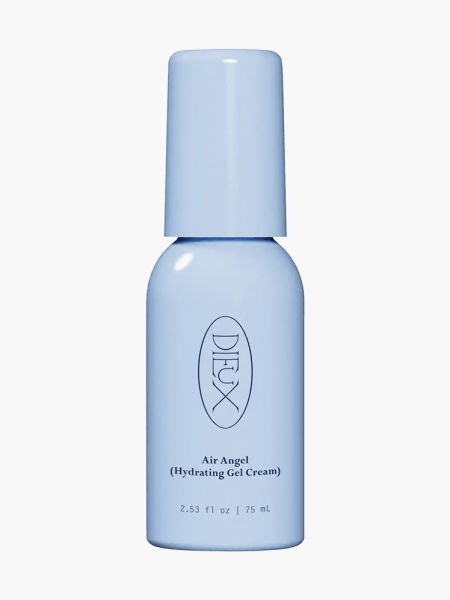
    Air Angel Daily Moisturizer in branded light blue bottle on light gray backgroundSave to wishlistSave to wishlist

    Dieux

    Air Angel

    $44

    Sephora

    $44

    Dieux

    Allure contributor Devon Abelman applying the Dieux Air Angel

    Devon Abelman

    Why it's worth it: True to its name, Air Angel is a weightless, cloud-soft gel cream that swoops in to plump, smooth, and calm your complexion. A cocktail of humectants—glycerin, urea, trehalose, and hyaluronic acid—pulls in moisture, while vegan collagen helps plump and smooth. Beyond surface hydration, vegan collagen offers an added edge: It’s lab-engineered for purity and consistency, making it both skin-friendly and more sustainable than animal-derived sources. A proprietary Barrier Repair Complex (peptides, ceramides, and other emollients) further reinforces the skin barrier, keeping your complexion balanced and resilient over time.

    Tester feedback from contributor Devon Abelman

    AccordionItemContainerButtonLargeChevron

    "This velvety gel enhances the natural glow of my skin without making it look too shiny or dewy. It layers seamlessly under sunscreen and makeup and even helps the latter go on smoother and gives it a fresher finish. I went through a bottle of this way too quickly and look forward to replenishing my Air Angel stash." —Devon Abelman, contributor

    More to know

    AccordionItemContainerButtonLargeChevron

    • Key ingredients: peptides, urea, ceramides, vegan collagen, amino acids, sodium hyaluronate
    • Fragrance-free: yes

    More collagen creams we love

    Best with SPF: Neutrogena Collagen Bank SPF Moisturizer
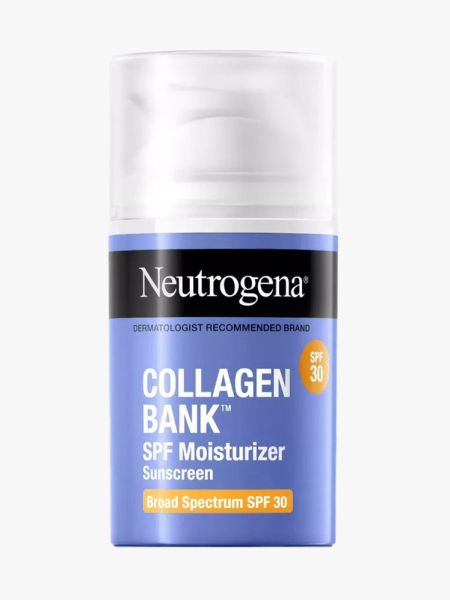
    Neutrogena Collagen Bank SPF Moisturizer squat periwinkle bottle of moisturizer with white cap on light gray backgroundSave to wishlistSave to wishlist

    Neutrogena

    Collagen Bank SPF Moisturizer

    $23

    Amazon

    $30

    Ulta Beauty

    Why it's worth it: Protect the collagen you've already got with the help of Neutrogena's Collagen Bank SPF Moisturizer (its non-SPF sister version won a 2025 Best of Beauty Award). Not only does it moisturize skin, but it's also spiked with SPF 30 to protect skin from UV damage, says Lindsey Zubritsky, MD, a board-certified dermatologist based in Ocean Springs, Mississippi. Peptides and hydrolyzed collagen join typical chemical UV filters such as avobenzone to bring additional plumping, collagen-production-boosting benefits to the SPF-infused cream. As a bonus, this formula comes in a pump bottle, which means less mess, especially when you’re in a pinch.

    Tester feedback from features director Dianna Singh

    AccordionItemContainerButtonLargeChevron

    “The best defense is a good offense, which is where Neutrogena Collagen Bank Moisturizer really shines: It helps you get ahead of the natural collagen loss that happens as we age. And the lightweight, nongreasy formula is easy to layer with other products. I use the non-SPF version, but the added protection in this one is always a bonus for those in a hurry or who don’t want too many steps in their routine." —Dianna Singh, features director

    More to know

    AccordionItemContainerButtonLargeChevron

    • Key ingredients: avobenzone (2.5%), homosalate (6%), octisalate (4.5%), octocrylene (8%), hydrolyzed collagen, peptides
    • Fragrance-free: yes

    Best Eye Cream: Kiehl's Super Multi-Corrective Anti-Aging Eye Cream
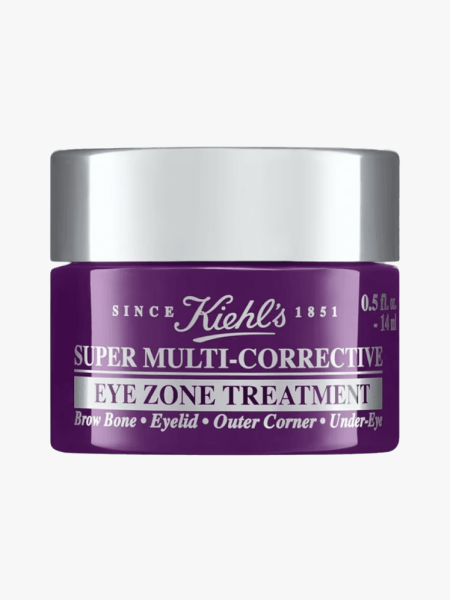
    Kiehl's Since 1851 Super Multi-Corrective Anti-Aging Eye Cream in branded component on a light gray backgroundSave to wishlistSave to wishlist

    Kiehl's

    Super Multi-Corrective Anti-Aging Eye Cream

    $60

    Amazon

    $60

    Nordstrom

    $60

    Ulta Beauty

    Why it's worth it: Kiehl’s Super Multi-Corrective Anti-Aging Eye Cream is designed to tackle the full checklist of eye-area concerns in one step. The lightweight, nourishing formula combines niacinamide, collagen peptides, and hyaluronic acid to smooth fine lines, enhance firmness, and provide deep hydration. It also contains bilberry seed extract, an antioxidant-rich botanical that helps protect against environmental stressors while brightening the under-eye area. Unlike heavier eye creams that can feel greasy or migrate into the eyes (ouch), this one has a silky, cushiony texture that absorbs quickly—perfect for use under makeup or as a nighttime treatment.

    More to know

    AccordionItemContainerButtonLargeChevron

    • Key ingredients: collagen peptide, niacinamide, sodium hyaluronate, bilberry seed extract
    • Fragrance-free: yes

    Best Body Cream: Sol de Janeiro Beija Flor Elasti-Cream
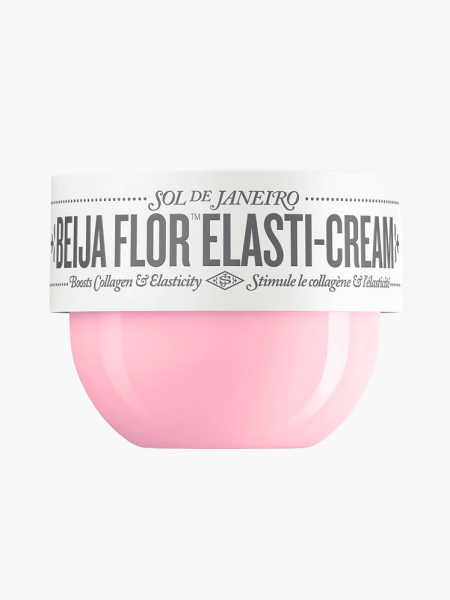
    Sol de Janeiro Beija Flor Elasti-Cream in branded component on a light gray backgroundSave to wishlistSave to wishlist

    Sol De Janerio

    Beija Flor Elasti-Cream

    $48

    Amazon

    $48

    Ulta Beauty

    $48

    Sephora

    Why it's worth it: Come for the fruity-floral Cheirosa ’68 scent, stay for the hydration and bounce. Sol de Janeiro’s Beija Flor Elasti-Cream doesn’t just smell like a tropical vacation; it delivers skin-care benefits that make it a staple. Collagen amino acids and polypeptides help support elasticity and smooth the appearance of fine lines, while cacay oil, cupuaçu butter, and squalane nourish the skin with lasting moisture. The rich, velvety texture melts right in without feeling heavy, so your skin feels plump, supple, and nourished long after application.

    Tester feedback from Lee

    AccordionItemContainerButtonLargeChevron

    “Every Sol de Janeiro product smells incredible, and this one’s no different—the fruity-floral scent is almost good enough to eat. But what really stood out was how plumping it is. My skin tends to get a little rough and bumpy year-round (keratosis pilaris likes to keep me on my toes), and this cream makes everything look smoother and feel way bouncier.” —Christa Joanna Lee, contributing commerce writer

    More to know

    AccordionItemContainerButtonLargeChevron

    • Key ingredients: vegan collagen amino acid, cacay oil, vegan squalane, polypeptides
    • Fragrance-free: no

    Best for Redness: First Aid Beauty Firming Cream
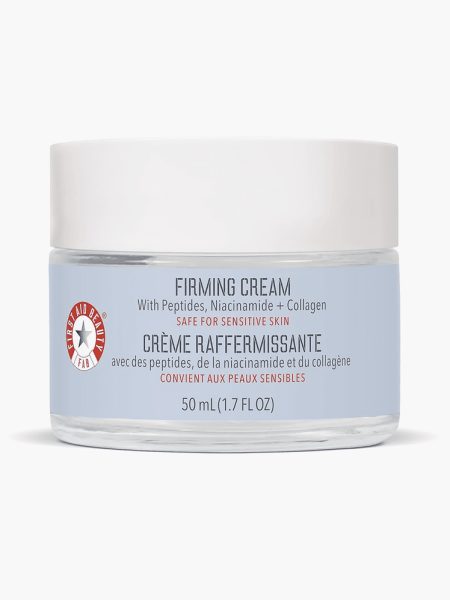
    Firming Cream in branded clear jar with white lid on light gray backgroundSave to wishlistSave to wishlist

    First Aid Beauty

    Firming Cream

    $44

    Amazon

    $44

    Dermstore

    $44

    Ulta Beauty

    Why it's worth it: If sensitivity or redness is your biggest concern, First Aid Beauty’s Ultra Repair Firming Collagen Cream delivers on all counts. It features colloidal oatmeal, which calms on contact along with niacinamide to hydrate, improve texture, and support barrier health. “This is also a great product for those looking for firmer, healthier skin,” says Anna Chacon, MD, a board-certified dermatologist based in Miami. The formula pairs collagen with peptides—“a type of protein that works to improve elasticity by stimulating the creation of collagen,” she says—to strengthen skin and restore bounce. Despite its rich, buttercream-like texture, it feels “cloud-like,” leaving skin deeply moisturized, smoother, and more radiant.

    More to know

    AccordionItemContainerButtonLargeChevron

    • Key ingredients: niacinamide, colloidal oatmeal, collagen, ceramides, peptides
    • Fragrance-free: yes

    Best for Deep-Set Wrinkles: Parëva Beauty Coll20 Gel Cream Moisturizer

    Save to wishlistSave to wishlist

    Why it's worth it: Dara Spearman, MD, a board-certified dermatologist based in Fort Wayne, IN, sings the praises of Parëva Beauty Coll20 Gel Cream Moisturizer, saying she's impressed by the science and results. “This is a scientist-developed formula that focuses on ingredients that signal youthful collagen regeneration while helping improve the appearance of fine lines and wrinkles,” she says, touting the brand’s proprietary technology called Molecur 3, which houses a vegan bio-identical collagen peptide that can improve skin texture and plump the skin, as well as squalene for hydration and niacinamide to support a strong skin barrier. “Its formula makes it more than just any basic moisturizer,” she says, adding that it specifically helps strengthen your skin barrier, so skin looks firmer and smoother with regular use. The gel-cream texture is designed to be deeply hydrating yet lightweight and never greasy, making it suitable for a wide range of skin types.

    More to know

    AccordionItemContainerButtonLargeChevron

    • Key ingredients: Molecur 3, niacinamide, squalane
    • Fragrance-free: no

    Frequently Asked Questions

    Does collagen cream actually work?

    The answer to this question depends on your intentions for adding a collagen cream to your skin-care routine. A collagen cream will definitely work if you only want to combat dryness and moisturize your skin. "[Your] skin will look healthier and plump," Dr. Desai says. After all, the only true benefit of topical hydrolyzed collagen is moisturizing skin, as cosmetic chemist Ginger King previously shared with Allure.

    If you want your collagen cream to boost collagen production, smooth fine lines, and amplify the elasticity of your skin, topical collagen itself cannot do so, according to board-certified dermatologist Dendy Engelman, MD. The collagen molecules used in skin-care products are too large to effectively penetrate the skin barrier and stimulate collagen synthesis.

    Fortunately, collagen creams can work to firm and rejuvenate skin if (and only if) topical collagen is joined by ingredients that have been scientifically proven to enhance collagen production, as Dr. Desai mentioned earlier.

    What ingredients pair well with collagen?

    The most effective collagen-boosting skin-care products are formulated with peptides or retinoids, Dr. Desai says. Unlike topical collagen, these ingredients are known to restore firmness and smooth wrinkles and have dozens of studies to substantiate this.

    Some other helpful ingredients to look for in collagen creams include niacinamide, ceramides, and plant-based retinol alternatives, like bakuchiol.

    Meet the experts

    • Anna Chacon, MD, is a board-certified dermatologist based in Miami.
    • Dara Spearman, MD, is a board-certified dermatologist based in Fort Wayne, IN.
    • Dendy Engleman, MD, is a board-certified dermatologist based in New York City.
    • Ginger King is a cosmetic chemist based in New Jersey.
    • Lindsey Zubritsky, MD, is a board-certified dermatologist based in Ocean Springs, Mississippi.
    • Mamina Turegano, MD, is a board-certified dermatologist based in New Orleans.
    • Mona Mislankar, MD, is a board-certified dermatologist and founder of Cincinnati Skin Center, based in Cincinnati.
    • Nina Desai, MD, is a board-certified dermatologist based in Manhattan Beach, California.
    • Peterson Pierre, MD, is a board-certified dermatologist at Golden State Dermatology, based in Thousand Oaks, California.

    How we test and review products

    When Allure tests a product, our editors look at it from every angle in an effort to best serve you. We review ingredients, scrutinize brand claims, and, when necessary, examine peer-reviewed scientific and medical studies. In addition to testing each and every product that's included in each and every review, we rely on experts who shape their fields, including dermatology, cosmetic chemistry, and medicine, to help us vet the ingredients and formulas.

    For our list of the best collagen creams, we considered each product's performance across five primary categories: product ingredients and efficacy, packaging, fragrance, texture, and product wear. Every product was determined to have excelled in each category by our editorial team, which is composed of in-house writers and editors as well as contributors—along with special consideration from dermatologists. To learn more information on our reporting and testing processes, read our complete reviews process and methodology page.

    Our staff and testers

    A beauty product is a personal purchase. You might be searching for a face cream to address persistent dryness or a new nail product to add to your Sunday self-care routine; you may simply be browsing around for the latest launches to hit the hair market. No matter what you seek or your individual needs and concerns, Allure wants to ensure that you love anything we recommend in our stories. We believe that having a diverse team of writers and editors—in addition to the wide range of outside testers and industry experts we regularly call upon—is essential to reaching that goal.

    After all, can we really say a skin-care product is the "best" for people over 50 if the only testers we've solicited opinions from folks who have yet to hit 30? Can we honestly deem a high-end diffuser worthy of your hard-earned cash if it's never been tested on curls? We're proud that our staff spans a wide range of ages, skin tones, hair textures, genders, and backgrounds, which means that we are able to fairly assess any beauty product that comes into the beauty closet.


  • These Facial Self-Tanners Always Leave a Radiant, Streak-Free Glow

    These Facial Self-Tanners Always Leave a Radiant, Streak-Free Glow

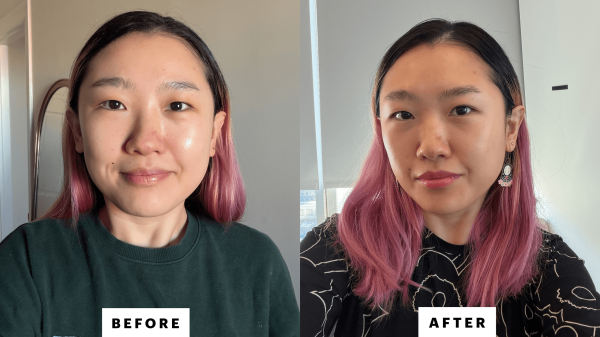
    A diptych of Allure commerce editor Sarah Han before and after applying the Dolce Glow Goccia di Sole Hydrating...Sarah Han / AllureSave StorySave this storySave StorySave this story
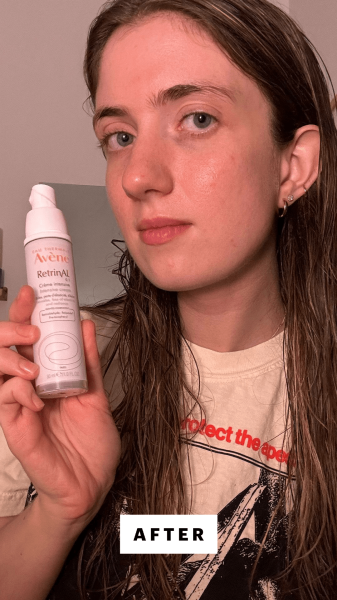
    Whether you’re a self-tanner devotee or just dipping your toes into the bronze life, the best facial self-tanners will have you glowing in no time. Throughout our extensive research, we found six formulas that won’t turn you into an Oompa Loompa, disappear after a single rinse, and don’t have that dreaded chemical smell. Yes, they exist! Many of these formulas are also infused with skincare ingredients like hyaluronic acid and vitamin C, so you get added benefits along with your glow. During testing, we assessed each pick for ease of application, how well it layered with existing skincare, shade development, and overall finish. Keep reading to see the Allure editor–approved favorites worth adding to your routine now.

    Our Top Facial Self-Tanners

    • Best Overall: Dolce Glow Goccia di Sole Hydrating Self-Tanning Serum Drops, $48
    • Best Color Payoff: Tan-Luxe The Face Illuminating Self-Tan Drops, $50
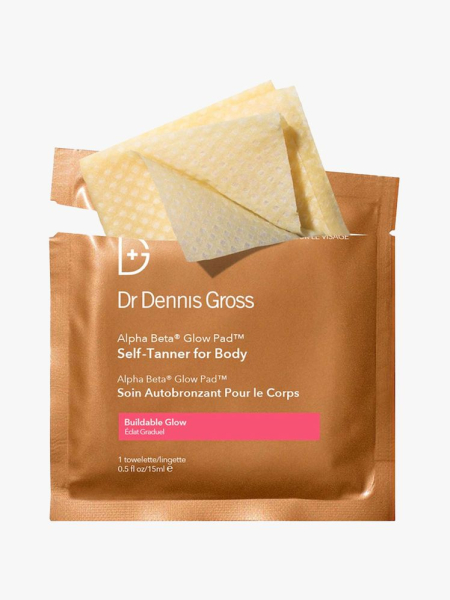
    • Best Exfoliating: Dr. Dennis Gross Skincare Alpha Beta Glow Pad Self-Tanner for Face, $48
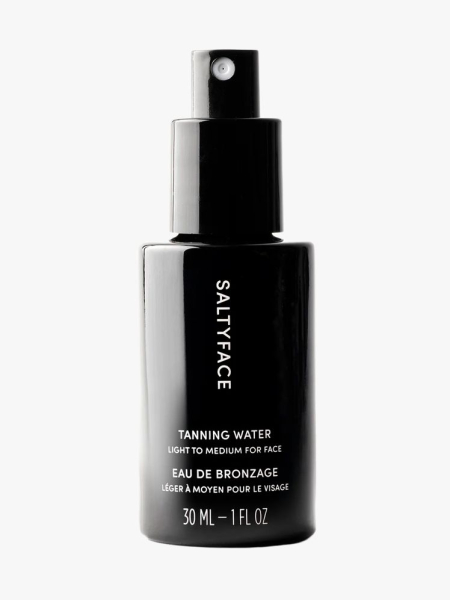
    • Best for Beginners: Saltyface Tanning Water, $42
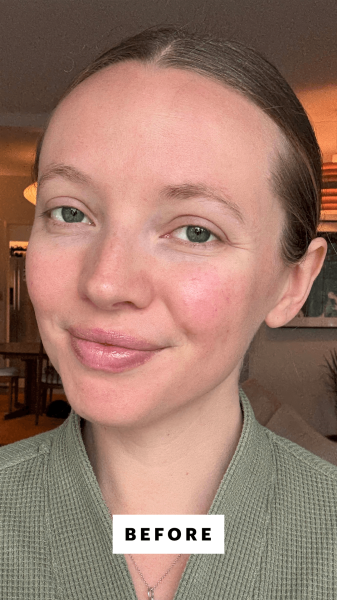
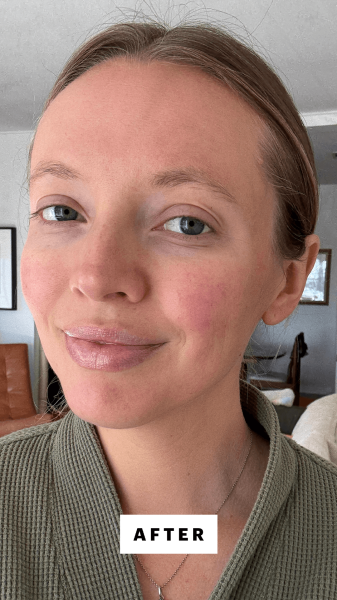
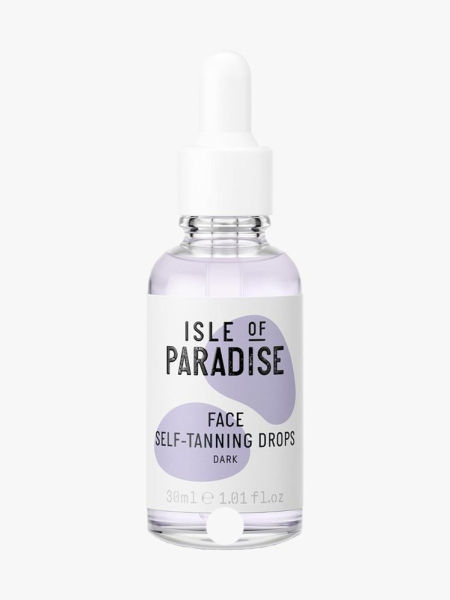
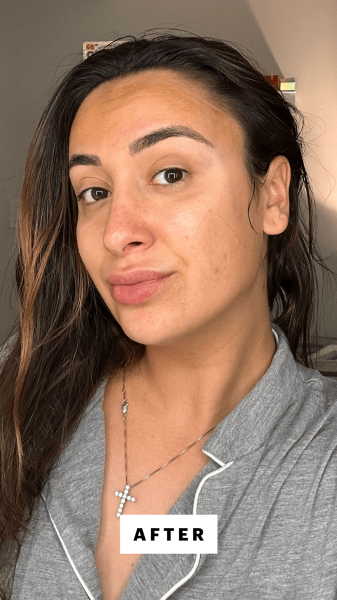
    • Best Shade Range: Isle of Paradise Face Self-Tanning Glow Drops, $30
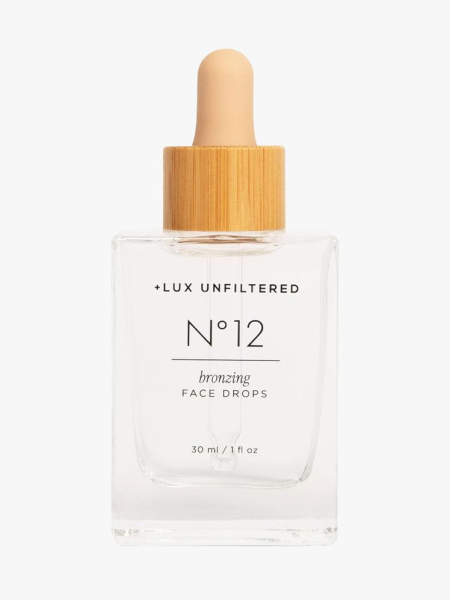
    • Best Hydrating: Lux Unfiltered N°12 Self Tanning Face Drops, $42

    Frequently Asked QuestionsAccordionItemContainerButtonLargeChevron

    • Is it okay to put body self-tanner on my face?
    • How do I apply a facial self-tanner?
    • Will facial self-tanner clog my pores?
    • What's the difference between facial self-tanner and bronzing drops?
    • Meet the experts
    • How we test and review products
    • Our staff and testers

    Best Overall: Dolce Glow Goccia di Sole Hydrating Self-Tanning Serum

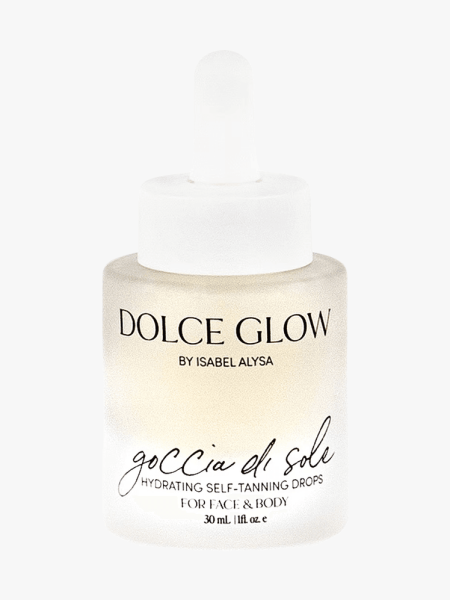
    Dolce Glow Goccia Di Sole Hydrating Self-Tanning Serum in branded component on a light gray backgroundSave to wishlistSave to wishlist

    Dolce Glow

    Goccia di Sole Hydrating Self-Tanning Serum

    $48

    Nordstrom

    $48

    Ulta Beauty

    $50

    Revolve

    Why we love it: It’s no surprise that Dolce Glow tops our list—between its Best of Beauty Award wins and its top spot on our list of the best self-tanning mousses, the brand knows what it takes to deliver a believable glow. The Goccia Di Sole Hydrating Self-Tanning Serum is another just-left-the-beach trickster we keep in constant rotation. Powered by hydrating hyaluronic acid, brightening vitamin C, and smoothing niacinamide, it leaves skin looking bronzed while staying soft, smooth, and plump—so you never have to choose between tan and hydration. Beyond the skin-care perks, it delivers a natural-looking, lasting glow—one that stood out as the most believable throughout our extensive testing. The scent is subtle and fresh, not overpowering at all, and doesn’t linger as it develops, making it easy to stay consistent with application. When one of our testers applied it at night, her tan lasted about five days before fading evenly, and her skin felt hydrated the entire time.

    Image may contain Head Person Face Happy Smile Adult Photography Portrait Body Part and Neck

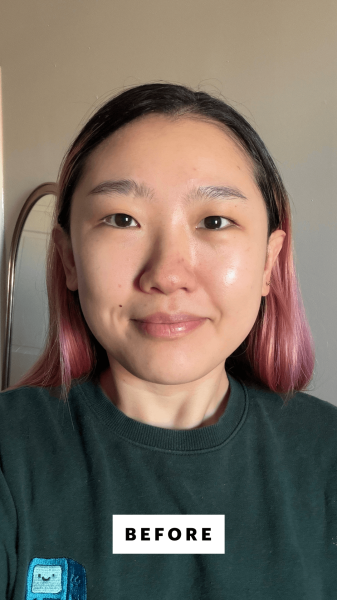
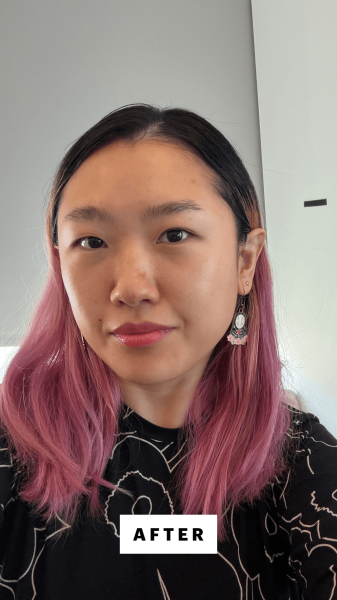
    Allure commerce editor Sarah Han before applying Dolce Glow Goccia di Sole Hydrating Self-Tanning Serum

    Image may contain Head Person Face Adult Photography Portrait Cosmetics and Lipstick

    Han four hours after applying Dolce Glow Goccia di Sole Hydrating Self-Tanning Serum

    Tester feedback from commerce editor Sarah Han

    AccordionItemContainerButtonLargeChevron

    “I’m very much a self-tanning newbie, and what better time to start experimenting than the dead of winter when my face is looking its palest and most dull? Plus, facial self-tanners seem far less intimidating than body self-tanners. (We’ll cross that bridge…maybe never.) These Dolce Glow drops are by far the easiest product I’ve tried so far. They feel like a usual face serum that’s super easy to spread evenly, thanks to its slip, so I get a nice, even tan after a few hours. I initially went the route of mixing the drops into my moisturizer but I prefer applying them directly to my face for much more noticeable results. Again, I’m at my palest right now, and want that extra boost of color—but maybe, in the summertime, I’ll revert to the moisturizer method to help ‘maintain’ my naturally warmer color. I love where I landed: a subtle glow that so clearly livened up my complexion—and honestly, I feel like I don’t even need makeup on these ‘tanner’ days because my skin looks less red.” —Sarah Han, commerce editor

    Tester feedback from former shopping market editor Angela Trakoshis

    AccordionItemContainerButtonLargeChevron

    “I always find that when I self-tan my face over any active acne, the blemish spots come out darker than the rest of my skin, but the niacinamide in this serum helps even it all out so there’s no patchiness, which is such a huge bonus for me.” —Angela Trakoshis, former shopping market editor

    More to know

    AccordionItemContainerButtonLargeChevron

    • Type: drops
    • Key ingredients: hyaluronic acid, vitamin C, niacinamide
    • Shades: 1
    • Development time: 4 to 8 hours
    • Fragrance: fresh, subtle scent
    • Lasts up to: 5 days

    Best Color Payoff: Tan-Luxe The Face Illuminating Self-Tan Drops

    Tan-Luxe The Face Illuminating Self-Tan Drops in branded component on a light gray backgroundSave to wishlistSave to wishlist

    Tan-Luxe

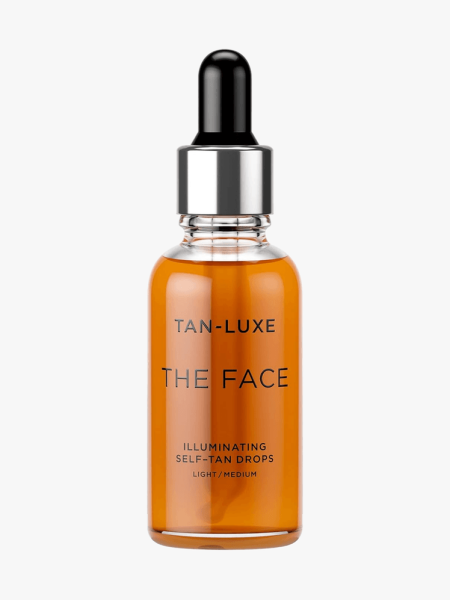
    The Face Illuminating Self-Tan Drops

    $50

    Amazon

    $50

    Nordstrom

    $55

    Ulta Beauty

    Why we love it: Listen, the Tan-Luxe The Face Illuminating Self-Tan Drops are it if you want a customizable glow that makes you look like you just returned from a Mediterranean getaway. They have everything a great facial self-tanner should have: skin-loving ingredients (hi, hydrating raspberry seed oil and vitamin E), two shade options, and a fresh scent.

    As far as application goes, we like mixing a few drops with our night cream (as we normally do with self-tan serums), and by morning, we’re left with a natural-looking warmth—no streaks or weird orange tint here! The smell? Almost nonexistent, which is a huge win in the self-tan world. Our testers noticed the glow lasted a solid four days, which is impressive, given how often we test the best face washes, exfoliants, and the list goes on.

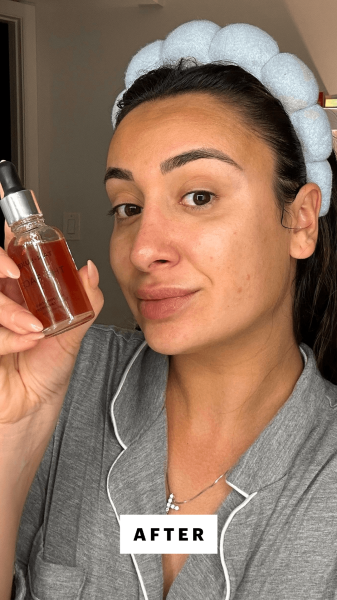
    Allure former shopping market editor Angela Trakoshis applying the Tan-Luxe The Face Illuminating Self-Tan Drops

    Angela TrakoshisTrakoshis 9 hours after using the TanLuxe The Face Illuminating SelfTan Drops

    Trakoshis 9 hours after using the Tan-Luxe The Face Illuminating Self-Tan Drops

    Angela Trakoshis

    Tester feedback from Trakoshis

    AccordionItemContainerButtonLargeChevron

    “This serum actually feels like skin care, so it’s so easy to implement into your routine. There are no streaks or weird orange payoff, so it looks like a believable tan, and its long-lasting wear is also impressive.” —Angela Trakoshis, former shopping market editor

    More to know

    AccordionItemContainerButtonLargeChevron

    • Type: drops
    • Key ingredients: raspberry seed oil, aloe vera, vitamin E
    • Shades: 2
    • Development time: 4 to 6 hours
    • Fragrance: minimal, fresh scent
    • Lasts up to: 4 to 5 days

    Best Exfoliating: Dr. Dennis Gross Alpha Beta Glow Pad Self-Tanner for Face

    Dr. Dennis Gross Skincare Alpha Beta Glow Pad Self-Tanner for Face in branded component on a light gray backgroundSave to wishlistSave to wishlist

    Dr. Dennis Gross Skincare

    Alpha Beta Glow Pad Self-Tanner for Face

    $48

    Nordstrom

    $48

    Dermstore

    $48

    Sephora

    Allure commerce writer Lily Wohlner applying the Dr. Dennis Gross Alpha Beta Glow Pad Self-Tanner for Face

    Lily Wohlner

    Why we love it: Dr. Dennis Gross’s Alpha Beta Glow Pads really are as simple as swipe and go—but they’re doing much more than just delivering color. The pads exfoliate and tan at the same time, so skin looks instantly smoother and noticeably glowier within the hour. While exfoliating and tanning might sound counterintuitive, the formula uses a blend of alpha and beta hydroxy acids to polish skin while the encapsulated DHA takes effect and develops into a natural-looking tan in under an hour—no rinsing required. Vitamin E rounds out the formula, keeping skin hydrated throughout the process. Think of it like exfoliating before a body tan, except this is a true two-in-one (and yes, there’s a body version, too). We like using the pads twice a week as part of our exfoliation routine for a sun-kissed glow, no matter the time of year.

    Dr Dennis Gross alpha beta tanner

    Wohlner before applying Dr. Dennis Gross Alpha Beta Glow Pad Self-Tanner for Face

    Lily WohlnerImage may contain Photography Face Head Person Portrait Adult Happy Smile Body Part Neck Accessories and Earring

    Wohlner four hours after applying Dr. Dennis Gross Alpha Beta Glow Pad Self-Tanner for Face

    Lily Wohlner

    Tester feedback from commerce writer Lily Wohlner

    AccordionItemContainerButtonLargeChevron

    “Whenever anyone asks me about my favorite facial self-tanner, I always point them to these. I usually use a mousse on my face when I do a full-body tan, but because I’m constantly washing my face, it fades much faster—these help keep my face just as tan as the rest of my body between full sessions. About three days after a full tan, I swipe one on to refresh my glow (I seriously get compliments every time) and keep everything looking seamless, without that harsh line. Major bonus points for how incredibly easy they are to use.” —Lily Wohlner, commerce writer

    More to know

    AccordionItemContainerButtonLargeChevron

    • Type: wipes
    • Key ingredients: alpha hydroxy acid (lactic, glycolic, and phytic), beta hydroxy acid, DHA, vitamin E
    • Shades: 1
    • Development time: 1 to 6 hours
    • Fragrance: minimal
    • Lasts up to: 3 days

    Best for Beginners: Saltyface Tanning Water

    Saltyface Tanning Water in branded component on a light gray backgroundSave to wishlistSave to wishlist

    Saltyface

    Tanning Water

    $42

    Saltyface

    Allure senior art director Ingrid Fowler applying the Saltyface Tanning Water

    Ingrid Fowler

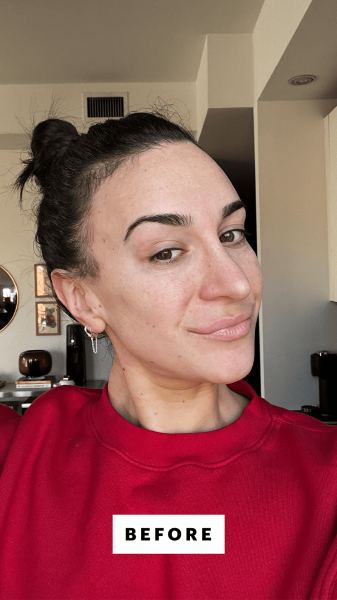
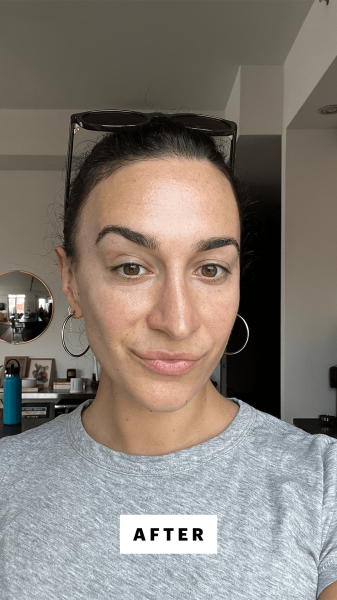
    Why we love it: You’d swear you were misting your face with a hydrating spray, but it’s actually Saltyface’s Tanning Water—a no-fuss staple we reach for when we want an effortless glow. The fine mist delivers a natural-looking, streak-free tan, with two shades to choose from (Light to Medium and Medium to Dark) for a more customized finish. It’s packed with skin-loving ingredients like aloe leaf and cucumber flower for hydration, plus calendula flower and linden leaf extract to support smoothness and firmness—all without clogging pores (yes, it’s acne-safe). We’ve even spritzed it on our face and neck before heading to the office—and at our desks for a midday refresh—and come home looking like we just landed from a Caribbean vacation.

    Editor's note: This product recently got a packaging upgrade. It previously had both mist and dropper options (the latter shown in Fowler's video), but now comes in a sturdier glass bottle with a singular fine-mist spray top.

    Fowler before applying the Saltyface Tanning Water

    Fowler before applying the Saltyface Tanning Water

    Ingrid FowlerFowler after applying the Saltyface Tanning Water

    Fowler after applying the Saltyface Tanning Water

    Ingrid Fowler

    Tester feedback from senior art director Ingrid Fowler

    AccordionItemContainerButtonLargeChevron

    “This is my favorite facial self-tanner, and I’ve tried many. It feels weightless on my skin after application, which is something I tend to dislike about tanner. The ‘Light to Medium” color leaves me with a very natural bronzy glow that blends seamlessly. Conveniently, one bottle lasts a long time. My one tip is to just be sure to wash your hands well right after application!” —Ingrid Fowler, senior art director

    More to know

    AccordionItemContainerButtonLargeChevron

    • Type: mist
    • Key ingredients: hibiscus extract, green mandarin water, hyaluronic acid
    • Shades: 1
    • Development time: 4 to 8 hours
    • Fragrance: tropical, fruity scent
    • Lasts up to: 3 to 4 days

    Best Shade Range: Isle of Paradise Face Self-Tanning Glow Drops

    Isle of Paradise Face Self-Tanning Glow Drops purple and white dropper bottle on light gray backgroundSave to wishlistSave to wishlist

    Isle of Paradise

    Face Self-Tanning Glow Drops

    $30

    Amazon

    $30

    Sephora

    Why we love it: Choose your own adventure with the Isle of Paradise Mini Self-Tanning Glow Drops: Mix a few drops into your moisturizer or apply them directly to the skin. There are three shades to choose from (Light, Medium, and Dark) to customize your color and intensity to your liking. These lightweight bronzing drops feature a blend of coconut, chia seed, and avocado oils, so it feels akin to hydrating skin care. There is a slight tan smell, but we overlook it because of how beautifully the tan develops.

    Trakoshis applying the Isle of Paradise Face Self-Tanning Glow Drops

    Angela Trakoshis12 hours after applying the Isle of Paradise Face SelfTanning Glow Drops

    Trakoshis 12 hours after applying the Isle of Paradise Face Self-Tanning Glow Drops

    Angela Trakoshis

    Tester feedback from Trakoshis

    AccordionItemContainerButtonLargeChevron

    “This is another formula that feels (and looks) like glowy skin care—so much that the bronzing hue it leaves behind seem like a bonus. I use the shade Medium because I have a olive skin tone, fyi. There is a slight tan smell, but I overlook it because of how beautifully the tan developed overnight.” —Angela Trakoshis, former shopping market editor

    More to know

    AccordionItemContainerButtonLargeChevron

    • Type: drops
    • Key ingredients: coconut oil, chia seed oil, avocado oil
    • Shades: 3
    • Development time: 4 to 6 hours
    • Fragrance: light, clean scent
    • Lasts up to: 5 days

    Best Hydrating: Lux Unfiltered N°12 Self Tanning Face Drops

    Lux Unfiltered N°12 Self Tanning Face Drops in branded component on a light gray backgroundSave to wishlistSave to wishlist

    Lux Unfiltered

    N°12 Self Tanning Face Drops

    $42

    Amazon

    $42

    Sephora

    Why we love it: Lux Unfiltered’s 2022 Best of Beauty Award-winning N°12 Self Tanning Face Drops have tons of skin care ingredients, including hyaluronic acid, coconut water, apple fruit extract, passionfruit oil, and pomegranate extract. Long story short: Hydration is the name of the game, which means this is a perfect match for dry skin. For more subtle results, add about three to five drops to your moisturizer, but if you want to go darker, some of our editors like to apply up to eight drops directly to the skin. It does take a little while longer than the others for this one to develop, so we like to sleep with this on to give it a full eight hours.

    Tester feedback from Wohlner

    AccordionItemContainerButtonLargeChevron

    “If you looked up ‘dry skin’ in the dictionary, you’d probably see my face (ugh)—which is exactly why I stick to tanners that deliver glow and hydration. This is my go-to when my skin feels especially tight and dry because it genuinely brings some bounce back, thanks to all its hydrating ingredients, especially when layered under a thick moisturizer.” —Lily Wohlner, commerce writer

    More to know

    AccordionItemContainerButtonLargeChevron

    • Key ingredients: hyaluronic acid, coconut water, apple fruit extract, passionfruit oil, pomegranate extract
    • Shades: 1
    • Development time: up to eight hours
    • Fragrance: fragrance-free
    • Lasts up to: 4 days

    Frequently Asked Questions

    Is it okay to put body self-tanner on my face?

    While there are overlapping ingredients in facial self-tanner and body self-tanner, David Kim, MD, a board-certified dermatologist in New York City, advises against using them interchangeably. "I would not use body self-tanner on the face," he tells Allure. "It's much more comedogenic and oily and can often break you out." Plus, facial self-tanners often include ingredients like hyaluronic acid and glycerin that specifically benefit your face's skin, so if you use body self-tanner on your kisser, you'd be missing out.

    How do I apply a facial self-tanner?

    Facial self-tanner goes on easily but, ideally, requires a little prep leading before you uncap the bottle. "Preparation starts with gentle exfoliation the day before ensure skin is smooth and free of dry patches, which can make color uneven," Cincinatti-based cosmetic chemist Kelly Dobos tells Allure. "Cleanse skin to remove makeup and traces of oil just before applying the self-tanner. Pay extra attention to blending around the hairline and avoid the eye area and lips. Be sure to wash your hands if you're not using some sort of applicator like a mitt," she adds.

    Before applying the self-tanner to your face, confirming you've chosen the right shade or planned the right amount of drops for your desired outcome is essential. "The lower the concentration of dihydroxyacetone (DHA), the more gradually you can build color and avoid uneven spots and splotches," says Dobos. "Because the color fades as the top layers of your skin naturally exfoliate, it can be near impossible to quickly correct areas that have gone too dark."

    Will facial self-tanner clog my pores?

    Some self-tanners have the potential to clog your pores, depending on the type and sensitivity of your skin. "I recommend looking for oil-free and 'non-comedogenic' options to make sure they're appropriate for oily acne-prone skin," says Dr. Kim. When a product is non-comedogenic, the formula won't cause pore blockages, also known as comedones or blackheads/whiteheads. Before you add a facial self-tanner to your cart, look at the fine print.

    What's the difference between facial self-tanner and bronzing drops?

    Facial self-tanner and bronzing drops may sound like synonyms, but they aren't. "Bronzing drops contain iron oxides and pearlescent pigments to provide an instant bronze glow. They are basically a form of makeup and can be washed from the skin," says Dobos. "The main difference between the two is that bronzing drops are temporary and rinse down the drain once it's time to wash your face, while tanning drops usually have a semi-permanent pigment. The latter relies on dihydroxyacetone (DHA), a sugar that safely darkens the skin," Dobos concludes. If you're looking for bronzing drops, however, you can't go wrong with the following:

    Meet the experts

    • David Kim, MD, a board-certified dermatologist based in New York City
    • Kelly Dobos, a cosmetic chemist based in Cincinnati

    How we test and review products

    Before reviewing any makeup, we ask questions about several factors: What ingredients are in it? Does the brand offer a wide shade range inclusive of consumers with all skin tones and undertones? Is it safe for readers who have sensitive skin or wear contact lenses? Is it on the affordable side or more of a splurge? Is its packaging consciously designed or needlessly wasteful?

    For our review of facial self-tanners, we enlisted the help of multiple editors, writers, contributors, and board-certified dermatologists and cosmetic chemists to review the products. This ensures our testing base spans different skin tones, genders, and dermatological conditions. We considered each product’s performance across four primary categories: ingredients, skin needs, ease of application, and longevity. For more on what's involved in our reporting, check out our complete reviews process and methodology page.

    Our staff and testers

    A beauty product is a personal purchase. You might be searching for a face cream to address persistent dryness or a new nail product to add to your Sunday self-care routine; you may simply be browsing around for the latest launches to hit the hair market. No matter what you seek or your individual needs and concerns, Allure wants to ensure that you love anything we recommend in our stories. We believe that having a diverse team of writers and editors — in addition to the wide range of outside testers and industry experts we regularly call upon — is essential to reaching that goal.

    After all, can we really say a skin-care product is the “best” for people over 50 if the only testers we’ve solicited opinions from folks who have yet to hit 30? Can we honestly deem a high-end diffuser worthy of your hard-earned cash if it’s never been tested on curls? We’re proud that our staff spans a wide range of ages, skin tones, hair textures, genders, and backgrounds, which means that we are able to fairly assess any beauty product that comes into the beauty closet.

  • The Mitchell and Peach English Leaf Body Soufflé Is the Ultimate Two-in-One—Review

    The Mitchell and Peach English Leaf Body Soufflé Is the Ultimate Two-in-One—Review

    Image may contain Bottle Lotion Tape and Cosmetics$28 at Mitchell and PeachSave StorySave this storySave StorySave this story

    TL;DR:

    • What it is: A body lotion
    • What it does: Moisturizes from head to toe
    • Who it’s for: Anyone looking for a lightweight, full-body lotion with a subtly fresh scent

    We may only be two weeks into the new year, but… I could use a vacation.

    However, since booking a trip less than a month into 2026 is about as realistic as pigs flying, I’ll have to outsource a cozy, idyllic English countryside escape with my skin-care routine.

    Enter the Mitchell and Peach English Leaf Body Soufflé. Because despite the addition of English honey, I don’t actually need to travel across the pond to experience the deliciousness (and versatility) of this full-body cream.

    It’s super lightweight, can be worn day and night, and has a refreshing scent (citrus, coriander, and basil) that layers nicely under (or instead of) my perfume. (I like to pair it with my go-to, The Harmonist Sacred Water.)

    I also find that the best time to apply the lotion is when I’m fresh out of the shower and towel-dried. My skin immediately soaks it up! While it’s great for hands and limbs, I start slathering at my décolletage and work the cream all the way down to my toes—a little goes a long way!

    You can find the Mitchell and Peach English Leaf Body Soufflé, along with other editor-loved products, in the January Allure Beauty Box.

    Get The BoxMitchell and Peach English Leaf Body Soufflé

    Mitchell and Peach English Leaf Body Soufflé

    $28 at Mitchell and Peach$28 at Mitchell and Peach

  • 10 Best Retinal Serums for Smoother, Firmer, and Brighter Skin

    10 Best Retinal Serums for Smoother, Firmer, and Brighter Skin

    Image contains an Allure editor holding a retinal serum surrounded by a collage of retinal serumsCollage: Paula Balondo; Source images: Courtesy of brandsSave StorySave this storySave StorySave this story

    Retinol walked, so retinal could run. If you’re ready to level up from your beginner-level retinol serum, the best retinal serums and creams deliver faster results in your skin-care routine—think smoother skin, fewer breakouts, and a brighter, more even skin tone—without jumping straight to a prescription-strength retinoid like tretinoin or adapalene.

    “Retinal—also called retinaldehyde—and retinol are both vitamin A derivatives,” says Asmi Berry, DO, a board-certified dermatologist in Los Angeles. “However, retinal is one step closer to becoming retinoic acid, which is the active form that binds to receptors in your skin to stimulate collagen production and skin cell turnover.” Because of that, retinal can work more quickly and more efficiently than even the best retinol cream.

    In fact, “retinal is 10 times more potent than retinol,” says Noah Levit, MD, a board-certified dermatologist in Connecticut. It’s no wonder many dermatologists refer to it as liquid gold, and some even use a face serum with retinal themselves. “I’ve been using vitamin A for decades—it’s truly been my fountain of youth,” says Sonia Badreshia-Bansal, MD, a board-certified dermatologist in Danville, California. "Even in my late 40s, people still think I’m in my 20s or 30s.” While you won’t see results overnight, consistency can pay off.

    Our Top Retinal Serums

    • Best Overall: Medik8 Crystal Retinal, $85
    • Best for Uneven Texture: The Inkey List Advanced 0.2% Retinal Serum, $15
    • Best for Dry Skin: KraveBeauty 24 Carrot Retinal, $28
    • Best for Sensitive Skin: Eau Thermale Avène Retrinal 0.1% Intensive Multi-Corrective Cream, $68
    • Best for Beginners: Peach & Lily Retinal For All Renewing Serum, $55
    • Best for Experienced Users: Remedy Science Super Stacked Healthy Aging Treatment, $38
    • Best Eye Cream: Beauty of Joseon Revive Eye Cream Ginseng + Retinal, $17

    Heads up: As with other retinol products, “retinal should be avoided during pregnancy and breastfeeding,” Dr. Levit says. And, of course, it’s best paired with sunscreen (which is a must if you’re targeting signs of aging, but especially necessary alongside retinal, which can leave skin more sensitive to sunlight). If you have the green light, check out these derm-approved picks that deliver real results.

    Frequently Asked Questions

    • Retinal versus retinol: What's the difference?
    • Is it better to use retinol or retinal?
    • Meet the experts
    • How we test and review products
    • Our staff and testers

    Best Retinal Serum Overall: Medik8 Crystal Retinal

    Medik8 Crystal Retinal 6 silver tube on light gray backgroundSave to wishlistSave to wishlist

    Medik8

    Crystal Retinal 6

    $85

    Amazon

    $85

    Dermstore

    $85

    Medik8

    Why we love it: With strengths ranging from 0.01% to 0.24% retinaldehyde, Medik8 Crystal Retinal has something for everyone, from sensitive skin newbies to seasoned retinoid pros. Its stability system sets it apart, which is essential to ensuring you’re getting an effective formula with minimal irritation. This formulation uses crystal encapsulation technology (like encapsulated retinol, just with retinal), a patented carrot seed oil complex, and airtight packaging—all designed to keep the retinal molecule ultra-potent and ultra-gentle. “It’s also formulated with hydrating ingredients like glycerin and hyaluronic acid to buffer any potential irritation, and the texture is creamy and fast-absorbing,” says Dr. Berry.

    The gradual system has made it popular among multiple Allure editors. “The brand makes it simple to ease into retinal use: You start with level 1 (sensitive) or 3 (beginner), then graduate to higher concentrations once your skin can tolerate them,” says former Allure content director Kara McGrath. "I haven't experienced any irritation with level 3, a rarity for my sensitive skin.”

    Allure features director Dianna Singh applying the Medik8 Crystal Retinal 6

    Dianna SinghSingh after applying the Medik8 Crystal Retinal 6

    Singh after applying the Medik8 Crystal Retinal 6

    Dianna Singh

    Tester feedback from Allure features director Dianna Singh

    AccordionItemContainerButtonLargeChevron

    “When vitamin A works, it really works—and this formula is a testament to the ingredient's line-smoothing prowess. Plus, it's one of the few that doesn't make my skin extra sensitive or turn my pillow yellow. Once I finish this bottle, I'm going to move up to the ‘advanced’ strength version.” —Dianna Singh, Allure features director

    More to know

    AccordionItemContainerButtonLargeChevron

    • Retinal percentage: 0.01%, 0.03%, 0.06%, 0.1%, 0.2%, 0.24% twin-encapsulated retinaldehyde
    • Other key ingredients: glycerin, hyaluronic acid
    • Fragrance-free: yes
    • Who it’s for: beginner or expert retinal users

    Best for Uneven Texture: The Inkey List Advanced 0.2% Retinal Serum

    The INKEY List Advanced Retinal Serum in branded tube component on a light gray backgroundSave to wishlistSave to wishlist

    The Inkey List

    Advanced 0.2% Retinal Serum

    $15

    Sephora

    $15

    The Inkey List

    Why we love it: While we’ve learned that encapsulated retinal can be gentle on sensitive skin, don’t mistake The Inkey List’s Advanced 0.2% Retinal Serum for taking it easy on fine lines and wrinkles. The formula pairs a higher-strength (0.2%) encapsulated retinal with 2% sirtalice (the brand’s proprietary peptide complex) to help support firmness and elasticity, plus Bacillus ferment to smooth texture and leave skin looking more even and refined. It’s an ideal next step if you’re already comfortable with retinoids and ready to graduate from beginner retinal formulas. It’s especially well-suited if your goals lean toward visible smoothing, refining, and long-term skin renewal rather than simple upkeep.

    Allure editor in chief Jessica Cruel applying the Inkey List Advanced 0.2% Retinal Serum

    Jessica CruelCruel after applying the Inkey List Advanced 0.2 Retinal Serum

    Cruel after applying the Inkey List Advanced 0.2% Retinal Serum

    Jessica Cruel

    Tester feedback from Allure editor in chief Jessica Cruel

    AccordionItemContainerButtonLargeChevron

    “I was always spotty when it came to locking in a retinol habit. Besides the slight burn on my face, it took months to know if it was working. This yellow-tinged retinal has shown improvements in my skin within weeks. I just use a few dots on my face and top with my favorite night moisturizer. I started to notice that my skin was looking radiant even before my morning serum-plus-sunscreen routine. I will also say this formula from Inkey List has none of the sting of other retinol creams I've tried.” —Jessical Cruel, Allure editor in chief

    More to know

    AccordionItemContainerButtonLargeChevron

    • Retinal percentage: 0.2% encapsulated retinol
    • Other key ingredients: 2% sirtalice, mango seed butter, Bacillus ferment
    • Fragrance-free: yes
    • Who it’s for: people who are ready for more advanced retinoids

    Best for Dry Skin: KraveBeauty 24 Carrot Retinal

    KraveBeauty 24 Carrot Retinal in branded component on a light gray backgroundSave to wishlistSave to wishlist

    KraveBeauty

    24 Carrot Retinal

    $28

    Amazon

    Why we love it: We’re always here for a good pun, but KraveBeauty’s 24 Carrot Retinal is more than just a clever name. It’s a wink to the formula’s star supporting player: carrot extract, which helps soothe stressed skin while delivering antioxidant protection. What really sets this serum apart, though, is its oil-entrapped approach. Retinal is notoriously sensitive to oxygen and only lightly soluble in water, which is why many retinal formulas lean creamy or lotion-like. KraveBeauty takes a different route with a gentle 0.05% retinal suspended in tiny droplets of yeast-derived torula oil inside an ultra-hydrating gel base. By keeping the retinal “entrapped” in oil, the formula stays stable and fresh, and the delivery feels cushier and less irritating on skin. That oil-based delivery also helps retain moisture and support the skin barrier, making the whole experience feel far more comfortable than you’d expect from a retinal.

    Allure commerce editor Sarah Han applying the KraveBeauty 24 Carrot Retinal

    Sarah HanHan after applying the KraveBeauty 24 Carrot Retinal

    Han after applying the KraveBeauty 24 Carrot Retinal

    Sarah Han

    Tester feedback from Allure commerce editor Sarah Han

    AccordionItemContainerButtonLargeChevron

    "I am known to go a little overboard with retinol at times. And, with the cold winter weather and dry air making my skin more susceptible to irritation, I've been using KraveBeauty 24 Carrot Retinal on the reg to get the skin-care benefits I desperately need—hey, uneven tone and texture—with minimal (nay, nonexistent) redness. The 0.05% concentration of retinal is mild enough that I've even gotten my boyfriend (a vitamin A newbie) using it. It absorbs immediately and something about the gel-like texture makes it feel unlike a typical retinoid—it's hard to describe, but keeps me coming back for more. I love how intentional KraveBeauty's formulations are and how they often source/upcycle ingredients that would otherwise be discarded, such as wine byproduct/waste and "ugly" carrots (the latter for this retinal)." —Sarah Han, Allure commerce editor

    More to know

    AccordionItemContainerButtonLargeChevron

    • Retinal percentage: 0.05% oil-entrapped retinal
    • Other key ingredients: carrot extract, torula oil
    • Fragrance-free: yes
    • Who it’s for: people with uneven tone, texture, or fine lines

    Best for Sensitive Skin: Eau Thermale Avène RetrinAL 0.1 Intensive Cream

    Avene RetrinAL 0.1 Intensive Cream in branded component on a light gray backgroundSave to wishlistSave to wishlist

    Avène

    RetrinAL 0.1 Intensive Cream

    $68

    Amazon

    $68

    Dermstore

    $68

    Ulta Beauty

    Why we love it: For sensitive skin types ready to dip a toe into the world of retinal, Avène Retrinal 0.1% Intensive Multi-Corrective Cream is a gentle yet effective place to start. “This is one of my favorite brands for mature or sensitive skin,” says Dr. Berry. “It uses retinaldehyde at a clinically backed concentration to smooth texture and even tone—without the irritation that often comes with retinoids.”

    Like all of the brand’s products, it’s infused with their signature thermal spring water, which “has a calming effect on the skin,” adds Dr. Levit. He also notes that adding niacinamide and hyaluronic acid makes it especially nourishing—even for eczema-prone skin. We can attest to this: Our own tester didn't need much of an acclimation process, and it absorbs quickly and easily. It doesn't have a pleasant smell, but it's also not particularly off-putting.

    Allure contributing commerce writer Annie Blackman applying the Eau Thermale Avène RetrinAL 0.1 Intensive Cream

    Annie BlackmanBlackman after applying the Eau Thermale Avène RetrinAL 0.1 Intensive Cream

    Blackman after applying the Eau Thermale Avène RetrinAL 0.1 Intensive Cream

    Annie Blackman

    Tester feedback from contributor Annie Blackman

    AccordionItemContainerButtonLargeChevron

    “I’m still early on in the old-enough-to-use-retinol phase of my life, but I have a nasolabial line that I’m trying to soften, and I feel hopeful about the trajectory of this product. It’s also hydrating and airy, and I feel like there’s definitely a bit more evenness to my skin.” —Annie Blackman, Allure contributor

    More to know

    AccordionItemContainerButtonLargeChevron

    • Retinal percentage: 0.1%
    • Other key ingredients: hyaluronic acid, niacinamide, thermal spring water
    • Fragrance-free: yes
    • Who it’s for: all skin types, especially people with mature or sensitive skin

    Best for Beginners: Peach & Lily Retinal For All Renewing Serum

    Peach & Lily Retinal For All Renewing Serum in branded component on a light gray backgroundSave to wishlistSave to wishlist

    Peach & Lily

    Retinal For All Renewing Serum

    $55

    Ulta Beauty

    Why we love it: If your complexion goals include brighter, more even-looking skin—but your skin is notoriously sensitive to actives—this serum makes retinal feel surprisingly doable. Peach & Lily Retinal For All Renewing Serum uses 0.1% encapsulated retinal, which releases slowly into the skin to help smooth uneven tone and boost radiance. “It’s potent yet gentle, with the help of ectoin, which has been clinically proven to reduce retinoid-related irritation,” says Cheryl Karcher, MD, a board-certified dermatologist based in New York City.

    Plenty of retinoid serums say they’re friendly to sensitive skin, but this one backs it up: In the brand’s clinical testing, the formula showed zero (!) water loss after application and virtually no skin-barrier disruption. A calming lineup of heartleaf extract, ceramides, hyaluronic acid, and antioxidants does the behind-the-scenes work to keep irritation at bay while results build. “Together, it improves texture and tone with minimal side effects,” says Dr. Karcher.

    Allure contributing commerce writer Christa Joanna Lee applying the Peach & Lily Retinal For All Renewing Serum

    Christa Joanna LeeLee after applying the Peach  Lily Retinal For All Renewing Serum

    Lee after applying the Peach & Lily Retinal For All Renewing Serum

    Christa Joanna Lee

    Tester feedback from Allure contributing commerce writer Christa Joanna Lee

    AccordionItemContainerButtonLargeChevron

    “The bright yellow hue of Peach & Lily’s Retinal All-Renewing Serum isn’t just to cheer up your day—it turns out retinal in its pure form naturally runs that color (and yes, it disappears as soon as you rub it in). The texture hits a sweet spot too: not so watery it drips off before you can get it on your face, but not so thick you’re massaging forever. Instead of leaving a glassy sheen, it feels like it’s sinking deeper and leaving things plush and cushioned from within. After a few nights, my skin felt baby-soft with zero hint of irritation.” —Christa Joanna Lee, Allure contributing commerce writer

    More to know

    AccordionItemContainerButtonLargeChevron

    • Retinal percentage: 0.1% encapsulated retinal
    • Other key ingredients: ectoin, heartleaf extract, ceramides
    • Fragrance-free: yes
    • Who it’s for: people with sensitive skin

    Best Eye Cream: Beauty of Joseon Revive Eye Cream Ginseng + Retinal

    Beauty of Joseon Revive Eye Cream Ginseng + Retinal in branded light pink tube with white pump on light gray backgroundSave to wishlistSave to wishlist

    Beauty of Joseon

    Revive Eye Cream Ginseng + Retinal

    $17 $16 (6% off)

    Amazon

    $17

    Sephora

    Why we love it: If your under-eyes are starting to rat you out for your doom-scrolling and repeat pizza nights, Beauty of Joseon Revive Eye Cream is one of our favorite Korean eye creams for faking the look of eight hours of sleep—though maybe hydrate and log off once in a while, yeah? Inspired by traditional Korean hanbang skincare, this silky cream blends ginseng (the OG brightener and circulation booster) with gentle, effective retinal to smooth fine lines and depuff tired eyes. The lightweight, serum-like texture melts right in, leaving your eye area looking firmer, glowier, and way more put-together than you feel.

    Han applying the Beauty of Joseon Revive Eye Cream Ginseng + Retinal

    Sarah HanHan after applying the Beauty of Joseon Revive Eye Cream Ginseng  Retinal

    Han after applying the Beauty of Joseon Revive Eye Cream Ginseng + Retinal

    Sarah Han

    Tester feedback from Han

    AccordionItemContainerButtonLargeChevron

    "I'm unconvinced eye creams provide long-term, visible results (e.g. minimizing the look of fine lines) without retinoids involved. Beauty of Joseon's Revive has been a staple in that regard. The custardy formula absorbs almost immediately and makes my undereyes look refreshed and slightly brighter. I even dab some onto my forehead lines (not super noticeable as of now, but you can't be too preventative)." —Han, Allure commerce editor

    More to know

    AccordionItemContainerButtonLargeChevron

    • Retinal percentage: not disclosed
    • Other key ingredients: ginseng, niacinamide
    • Fragrance-free: yes
    • Who it’s for: all skin types

    More retinal serums we love:

    Best for Experienced Users: Remedy Science Super Stacked Healthy Aging Treatment

    Remedy Super Stacked Healthy Aging Treatment in branded component on a light gray backgroundSave to wishlistSave to wishlist

    Remedy

    Super Stacked Healthy Aging Treatment

    $38 $35 (8% off)

    Amazon

    Why we love it: If you’re already well-versed in the benefits of retinal and ready to streamline your routine, Remedy Science Super Stacked Healthy Aging Treatment makes a strong case for doing more with less. It combines 0.1% encapsulated retinol and 0.05% retinaldehyde—“a formulation recommended for more experienced retinol users to help smooth fine lines and improve texture,” says Patricia Oyetakin, MD, a board-certified dermatologist based in Newnan and Stockbridge, GA. From there, it layers in peptides like argireline and matrixyl 3000 for firmness, glycolic acid for gentle resurfacing, niacinamide for brightness, and ceramides to keep skin comfortable. “It’s truly a one-and-done option for busy people who want visible results without a complicated routine,” says Dr. Oyetakin.

    More to know

    AccordionItemContainerButtonLargeChevron

    • Retinal percentage: 0.05%
    • Other key ingredients: 0.1% encapsulated retinol, 2% argireline, glycolic acid, 2% niacinamide, matrixyl 3000
    • Fragrance-free: yes
    • Who it’s for: people with mature skin

    Best for Crepey Skin: Murad Retinal Resculpt Overnight Treatment

    Murad Retinal ReSculpt Overnight Treatment in branded component on a light gray backgroundSave to wishlistSave to wishlist

    Murad

    Retinal Resculpt Overnight Treatment

    $105

    Amazon

    $105

    Ulta Beauty

    Why we love it: If your skin is starting to look (and feel) a little at the mercy of gravity, Murad Retinal ReSculpt Overnight Treatment is made for the areas that tend to show it first—namely, the neck and jawline, as skin here is thinner, drier, and naturally lower in elasticity than the face. The formula uses encapsulated retinal to help smooth and support collagen over time, paired with kangaroo paw flower extract, a plant ingredient known for helping improve the look of elasticity and firmness. Olive, oat, and alpha-glucan help keep skin hydrated and comfortable, which matters when you’re using retinal on more delicate skin. “It improves elasticity and reduces the appearance of wrinkles while maintaining skin hydration and minimizing irritation,” says Ryan Turner, MD, a board-certified dermatologist based in New York City. Consistency is key here—while you might not feel tightening right away, the real lift shows up over time with regular use.

    More to know

    AccordionItemContainerButtonLargeChevron

    • Retinal percentage: undisclosed
    • Other key ingredients: kangaroo paw flower extract, olive extract, shea butter, oat extract
    • Fragrance-free: no
    • Who it’s for: people with saggy or crepey skin

    Best for Mature Skin: Isdin Isdinceutics Retinal Advanced Serum

    Isdin Isdinceutics Retinal Advanced Serum gold and black bottle and box on light gray backgroundSave to wishlistSave to wishlist

    Isdin

    Isdinceutics Retinal Advanced Serum

    $185

    Amazon

    $185

    Dermstore

    Why we love it: Not your first rodeo with retinal? Then Isdin Retinal Advanced Rejuvenating Facial Night Serum is a great next step to level up your routine. “It’s a dual-phase formula with both an oil phase and an aqueous phase, leaning more toward the hydrating and moisturizing side,” says Dr. Levit. “The oil phase delivers the key actives—including retinaldehyde and bakuchiol—while ingredients like dimethicone help protect the skin and glycerin boosts hydration. Melatonin is another standout for its skin-repairing benefits,” he says. If you have sensitive skin, just a heads-up: It’s lightly fragranced. But, according to Dr. Levit, “most of my patients find the scent pleasantly subtle—and they actually appreciate that it tones down the overly ‘clinical’ smell you sometimes get with fragrance-free treatments.”

    More to know

    AccordionItemContainerButtonLargeChevron

    • Retinal percentage: not disclosed
    • Other key ingredients: bakuchiol, melatonin
    • Fragrance-free: no
    • Who it’s for: all skin types

    Best for Dark Spots: Allies of Skin Retinal 0.1% & Peptides Advanced Repair Night Cream

    Allies of Skin Retinal 0.1% & Peptides Advanced Repair Night Cream black tube on light gray backgroundSave to wishlistSave to wishlist

    Allies of Skin

    Retinal 0.1% & Peptides Advanced Repair Night Cream

    $130

    Amazon

    $130

    Nordstrom

    $130

    Dermstore

    Why we love it: From dryness and breakouts to fine lines and dark spots, Allies of Skin Retinal 0.1% & Peptides Advanced Repair Night Cream is your skincare all-in-one. It blends encapsulated retinal (for a gentler retinoid experience), six firming peptides, and 11 antioxidants and brighteners to smooth texture, give an even tone, and bring out your skin’s glow. “This serum is great for anyone looking for retinal paired with barrier-loving ingredients like ceramides, and peptides,” says Dr. Berry. “It’s powerful but gentle, feels soft on the skin, and layers well with other actives. I especially recommend it for patients with drier skin.”

    More to know

    AccordionItemContainerButtonLargeChevron

    • Retinal percentage: 0.1%
    • Other key ingredients: peptides, ceramides, omegas
    • Fragrance-free: yes
    • Who it’s for: all skin types, especially for dry skin

    Frequently Asked Questions

    Retinal versus retinol: What's the difference?

    “Retinal and retinol are both vitamin A derivatives, but retinal is one step closer to retinoic acid—the active form your skin uses. That means it works faster and is typically more potent than retinol,” says Dr. Levit. While retinol needs two conversions in the skin to become active, retinal only needs one, so you’ll often see quicker results when smoothing fine lines, improving texture, and fading dark spots. That said, “retinal can also be slightly more intense, so it’s usually recommended for those who’ve already built some tolerance to retinoids,” he says.

    Is it better to use retinol or retinal?

    It depends. “If you have sensitive skin or are brand-new to retinoids, retinol is a great place to start,” says Dr. Berry. “If you're already tolerating retinol well, or you're targeting deeper wrinkles, pigmentation, or acne, retinal can offer faster and more noticeable results with less irritation than prescription-strength options.”

    Meet the experts

    • Sonia Badreshia-Bansal, MD, a board-certified dermatologist and RealSelf expert based in Danville, CA
    • Asmi Berry, DO, a board-certified dermatologist in LA
    • Cheryl Karcher, MD, a board-certified dermatologist at Center Aesthetic & Dermatology based in New York City
    • Noah Levit, MD, a board-certified dermatologist of Dermatology Physicians of Connecticut based in Fairfield, Hamden, and Norwalk, CT
    • Patricia Oyetakin, MD, a board-certified dermatologist of Epiphany Dermatology based in Newnan and Stockbridge, GA
    • Ryan Turner, MD, a board-certified dermatologist and founder of Turner Dermatology based in New York City

    How we test and review products

    When Allure tests a product, our editors look at it from every angle in an effort to best serve you. We review ingredients, scrutinize brand claims, and, when necessary, examine peer-reviewed scientific and medical studies. In addition to testing each and every product that's included in each and every review, we rely on experts who shape their fields, including dermatology, cosmetic chemistry, and medicine, to help us vet the ingredients and formulas.

    For our list of the best retinal serums, we considered each product's performance across five primary categories: product ingredients and efficacy, packaging, fragrance, texture, and product wear. Every product was determined to have excelled in each category by our editorial team, which is composed of in-house writers and editors as well as contributors—along with special consideration from dermatologists. To learn more information on our reporting and testing processes, read our complete reviews process and methodology page.s involved in our reporting, check out our complete reviews process and methodology page.

    Our staff and testers

    A beauty product is a personal purchase. You might be searching for a face cream to address persistent dryness or a new nail product to add to your Sunday self-care routine; you may simply be browsing around for the latest launches to hit the hair market. No matter what you seek or your individual needs and concerns, Allure wants to ensure that you love anything we recommend in our stories. We believe that having a diverse team of writers and editors—in addition to the wide range of outside testers and industry experts we regularly call upon—is essential to reaching that goal.

    After all, can we really say a skin-care product is the "best" for people over 50 if the only testers we've solicited opinions from folks who have yet to hit 30? Can we honestly deem a high-end diffuser worthy of your hard-earned cash if it's never been tested on curls? We're proud that our staff spans a wide range of ages, skin tones, hair textures, genders, and backgrounds, which means that we are able to fairly assess any beauty product that comes into the beauty closet.