 Collage: Briana Rengifo; Source Images: Getty Images & Jaime-Lee BSave this storySave this story
I’m not doing my edges this year. I know that’s a bold statement, but after years of slicking them back into tight buns and meticulously styling them into swirls when I have braids, I’m ready to hang up my beloved knotless braids and sew-ins (for now).
According to natural hair experts, I’m not alone in making this decision. They foresee 2026 as the year of low-tension, undone styles that lean into the natural pattern of textured hair. Susan Oludele, a hairstylist and braider in Los Angeles, has noticed that more of her clients are requesting styles with less gel and tension. This is a notable departure from previous years, when people preferred tighter styles with more product because they looked neater and lasted longer. “Everyone wants to grow their edges and their hair now,” says Oludele.
Many creative styles came out of 2025: Looks that combine cornrows and sew-ins were heavily requested; freestyle cornrows were all over the feeds; even braids that mimic the appearance of straightened hair. This year, though, “people will be doing a lot of hairstyles with their own hair,” says Oludele. Expect to see mini twists and Sisterlocks done on natural hair or with kinky human-hair extensions for added length.
That doesn’t mean we’re completely foregoing sleek looks, though; we’re swapping polished ponytails that pull on the scalp for glossy pixies and coils that give the same shine and luster without the tension. Stylists predict those with short natural hair will lean into sculpted styles (like finger-coils and finger-waves), while those who have long hair will flex their inches with soft, fluffy silk presses that require minimal heat.
For those focused on growing their hair and retaining length, Ivy and Tanavoho braids tuck your strands away without tugging too hard on your scalp. (Both styles prioritize minimal gripping at the roots and a natural finish.) Ahead, experts share their predictions for 2026 natural hair trends.
Wavy Pixie
 Jaime-Lee B.
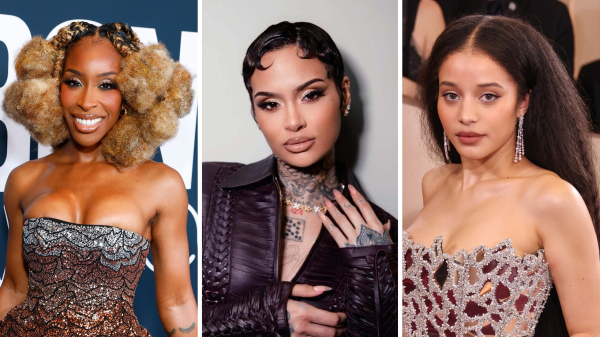
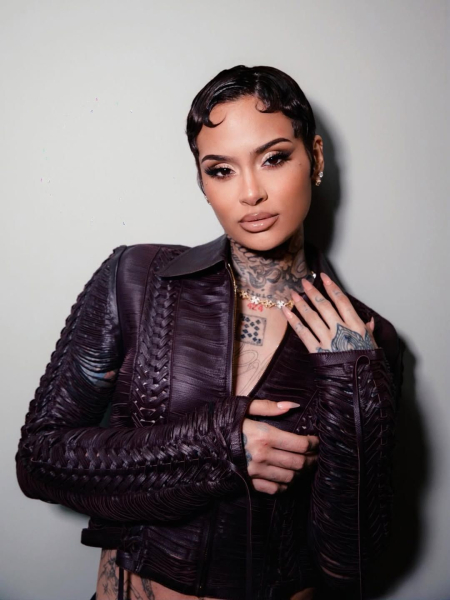
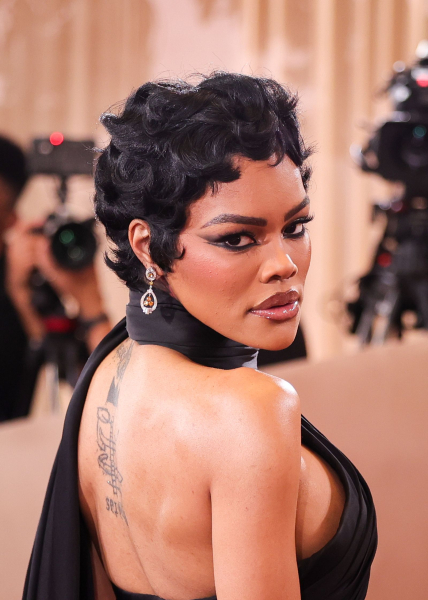
Pixies had a moment last year, with stars like Keke Palmer, Teyana Taylor, and Zoë Kravitz getting in on the crop. (I even chopped my hair into a cute little coily pixie.) Stylists say the crop isn’t going anywhere, but it will likely get a glossy update. Taylor and Kehlani both have sleek, wavy pixies.
Taylor’s pixie, in particular, is accentuated by shiny, fluffy waves. To get the look, form tiny waves with a mini flatiron, like the RevAir Micro Edge Styler (which is about 0.3 inches), and apply a lightweight oil for a slight sheen. Nikki Nelms used Shea Moisture Smooth & Shine Hair Oil on Taylor at the Golden Globes (a product I also use and love). The 4U by Tia Multi-Use Oil is another great lightweight oil that adds subtle shine and reduces frizz.
 Getty Images
Kehlani has made appearances with her hair slicked down and sculpted to highlight her waves. The wet look is equal parts sensual and cute, and it’s easy to re-create at home. Just work a medium-hold gel, like Eco Style Gel, throughout your hair, followed by a copious amount of mousse (you can count on Mizani Styling Foam to be flake-free). Before everything dries down, use a narrow-tooth comb to define your waves. Finally, set your style with a durag or scarf.
Ivy Braids
 Susan Oludele
 Getty Images
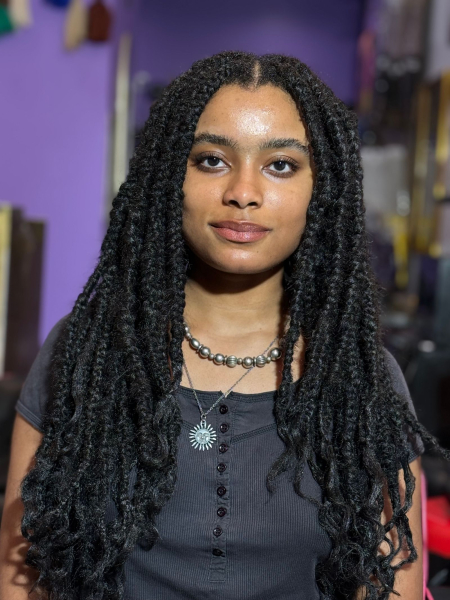
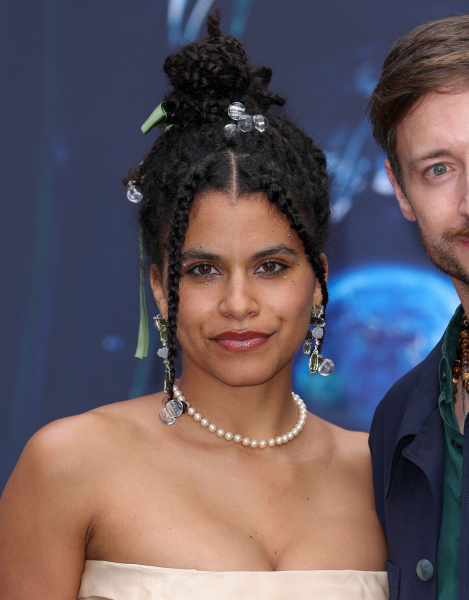
Boho braids reigned supreme for the past few years, but there’s a new box braid style in town: ivy braids. Oludele accidentally created the now-viral hair look while freestyling braids on actor Zazie Beetz in 2025. Keeping a lived-in look in mind, the braider began with traditional box braids: “I started experimenting with the braiding hair, in a sort of back-combing method,” Oludele explains, ultimately landing on a perfectly undone braid style that feels more down-to-earth than traditional knotless box braids.
After the photo shoot, Oludele’s inbox blew up with people wanting to know more about ivy braids—and it’s still one of her most requested styles. People love that these braids are easy on the scalp: “It finally feels like a style we can do that doesn't require much tension," says Oludele.
To create ivy braids, start with clean, natural hair. You can skip the gel because fuzzy roots are key to giving these braids their lived-in effect. “Braid really loose at the root,” says Oludele. “Imagine you’re three years old: How would a three-year-old braid? With a very loose hand.” Using regular Kanekalon braiding hair to create this style is ideal, but if you want an even more textured look, you can use Afro-kinky hair.
Tanavoho Braids
 Getty Images
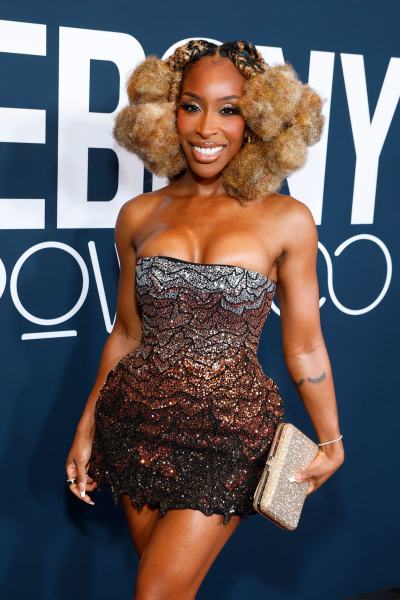
You may not see this style often now, but it wasn’t always uncommon. This look was worn by single women in the Sakalava Tribe of Madagascar, which formed the country's first major kingdom in the 16th century. The style resembles a crown, with braids that end with a puff framing the head in a circular shape.
Rihanna wore the look on her British Vogue cover in 2020, and the style gained minor global traction after that, but Oludele says, 2026 is the year that Tanavoho braids will become mainstream in the United States. “A lot of the old hairstyles from Africa are resurfacing again,” she says. “People want more cultural and artistic looks.”
Tanavoho braids start as box braids (or locs) at the root, then get plaited down to about the length of a bob before ending with round puffs of kinky hair. “You can use regular braiding hair or Afro-kinky hair and create the balls by matting the hair with a teasing or back-combing method,” says Oludele.
Some stylists use a hairnet to secure the puffs and create a more rounded shape, while others prefer to leave them a little undone.
Fluffy Silk Press
 Getty Images
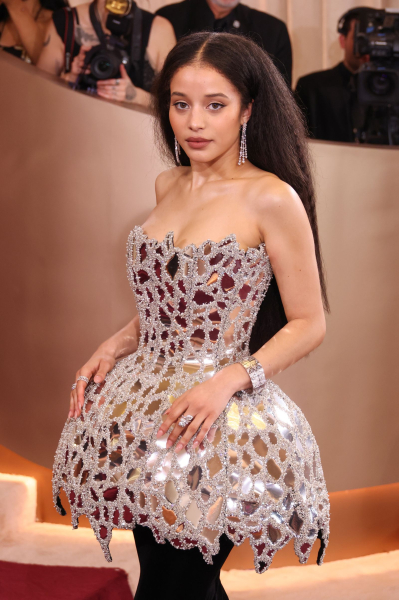
The fluffy silk press had a trending moment in 2024, and it’s making a comeback as people strive to do less to their natural hair in 2026. This soft style has already had a major red carpet moment on Chase Infiniti at the Golden Globes. The actor’s long, airy hair flowed behind her like a cloud, while her face was neatly framed by a middle part with hair tucked behind her ears.
Ariana Greene, a hairstylist in New York City, says her go-to technique to achieve a voluminous, fluffy blowout is using a blow-dryer brush. She recommends the Kitsch Large Thermal Round Brush. And the Kristin Ess Volumizing Blowout Brush, which has a paddle brush, easily glides through my detangled coils, giving me a soft blowout in a matter of minutes.
This style doesn’t use as much heat as a traditional silk press (it doesn’t require a flatiron), but Greene still recommends using heat protection. She loves the Kenra Blow Dry Spray and the Paul Mitchell Super Skinny Serum. Both products reduce frizz when applied to damp hair before blow-drying. As your fluffy silk press begins to get old, you can plait your hair in four to six jumbo braids. Take the braids out after a day, and you’ll have an airy braid-out.
Finger-coils
 Annie Blay-Tettey
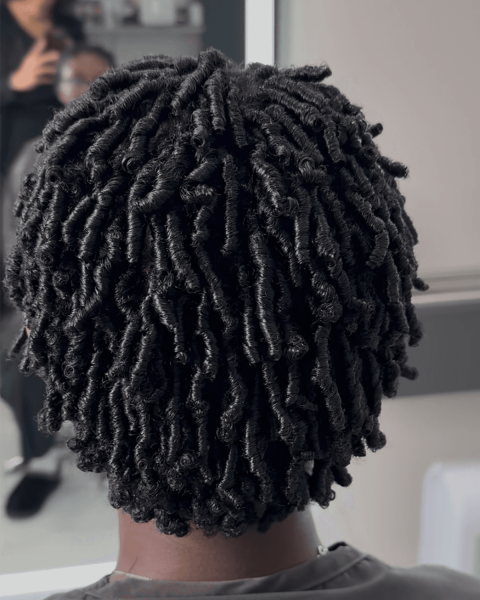
Yes, we're manipulating our hair less this year, but this notoriously time-consuming hairstyle has benefits you just can’t pass up. Iandra Regalado, a hairstylist in New York and Jersey City, says she’s been getting more requests than ever for this look.
Regalado, who did my finger coils in December, says the style is especially popular among clients who are transitioning from permed or damaged hair to natural hair. “Many of them are dealing with heat damage and aren’t ready to cut all of their hair off yet,” she says. “Finger-coiling helps train the hair to do what it’s naturally supposed to do, even when there’s still some damage present. Over time, it can help encourage a more uniform curl pattern and make the strands appear more evenly curled.”
When creating your finger coils, Regalado says, pay attention to the size of each coil. “Smaller sections create more defined, longer-lasting coils, while larger sections give you a bigger, softer curl,” explains Regalado, who created small, tight coils on my hair. Of course, creating smaller sections will take longer—it took about an hour to finger-coil my whole head.
Products that offer both hydration and hold will give you the best results with this style. Regalado recommends first using a leave-in, like the Crown Affair Leave-In, that hydrates the hair, followed by a strong-hold gel (I love the Olaplex No. 10 Curl Defining Gel) to create defined coils.
A key step in creating finger-twists is sitting under a hooded dryer after finishing the coils. “This helps lock in moisture and set the hold,” says Regalado, “which is especially important if you want the style to last longer and maintain its definition.”
Sisterlocks
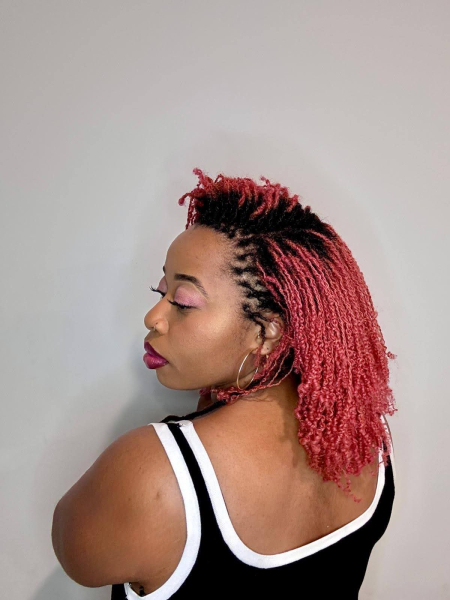 Maya Smith
Sisterlocks are far from new, but Maya Smith, a hairstylist in South Carolina, says they’re definitely having a moment. The style involves interlocking natural hair from root to tip by creating teeny comb coils or tiny twists, known as starter locs. After your roots start to grow out, you’ll need to revisit the stylist, who will re-loc your roots to match the rest of your hair.
As your hair grows and you continue to re-loc, it will eventually look like this coveted style. The process can be tedious, which is why getting this style is often referred to as “a journey.” Smith warns: “Locs require commitment and intentionality, especially in the beginning, while they’re still forming. If you’re someone who doesn’t want to be bothered with styling and caring for your natural hair, this isn’t the look for you.”
Due to how tiny the locs are and how meticulous the process is, be sure to ask your stylist if they are specifically licensed to do sisterlocks. “You want to make sure whoever is doing your locs knows what they’re doing and understands natural hair in its entirety,” says Smith, “so they can determine the best sizing, technique, and products to use to achieve the best foundation and longevity of your locs.”
Mini Twists
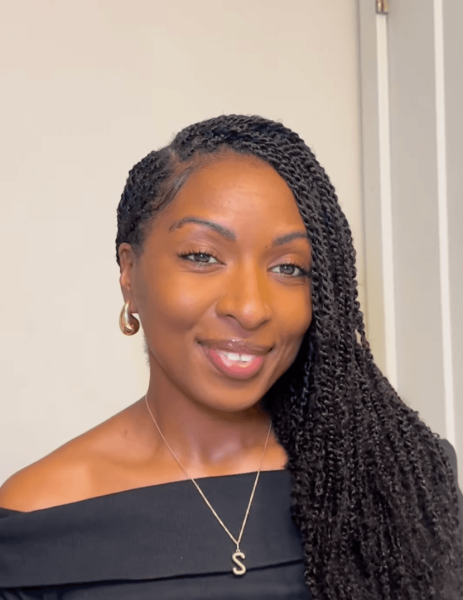 Instagram / @dippedinshanelle
If you’re not ready to commit to a look like Sisterlocks, mini twists (simple, two-strand twists) are an equally trendy alternative. They have a similar vibe, but can be taken out after a few weeks.
Plus, you can easily do mini twists on yourself at home, which I’ve done many times. You’ll need a parting comb, gel, and kinky extensions (if you want added length). Starting with clean hair, begin parting into small (pencil-width) sections and applying a dime-size amount of gel to each section before twisting. I love The Doux Big Poppa Curl Defining Gel, which gives my twists a long-lasting hold without causing too much shrinkage or leaving a crunchy cast.
If you want looser, less springy twists, or just longer twists, try blow-drying your hair before twists to stretch out your natural curl pattern.
Leave a Reply